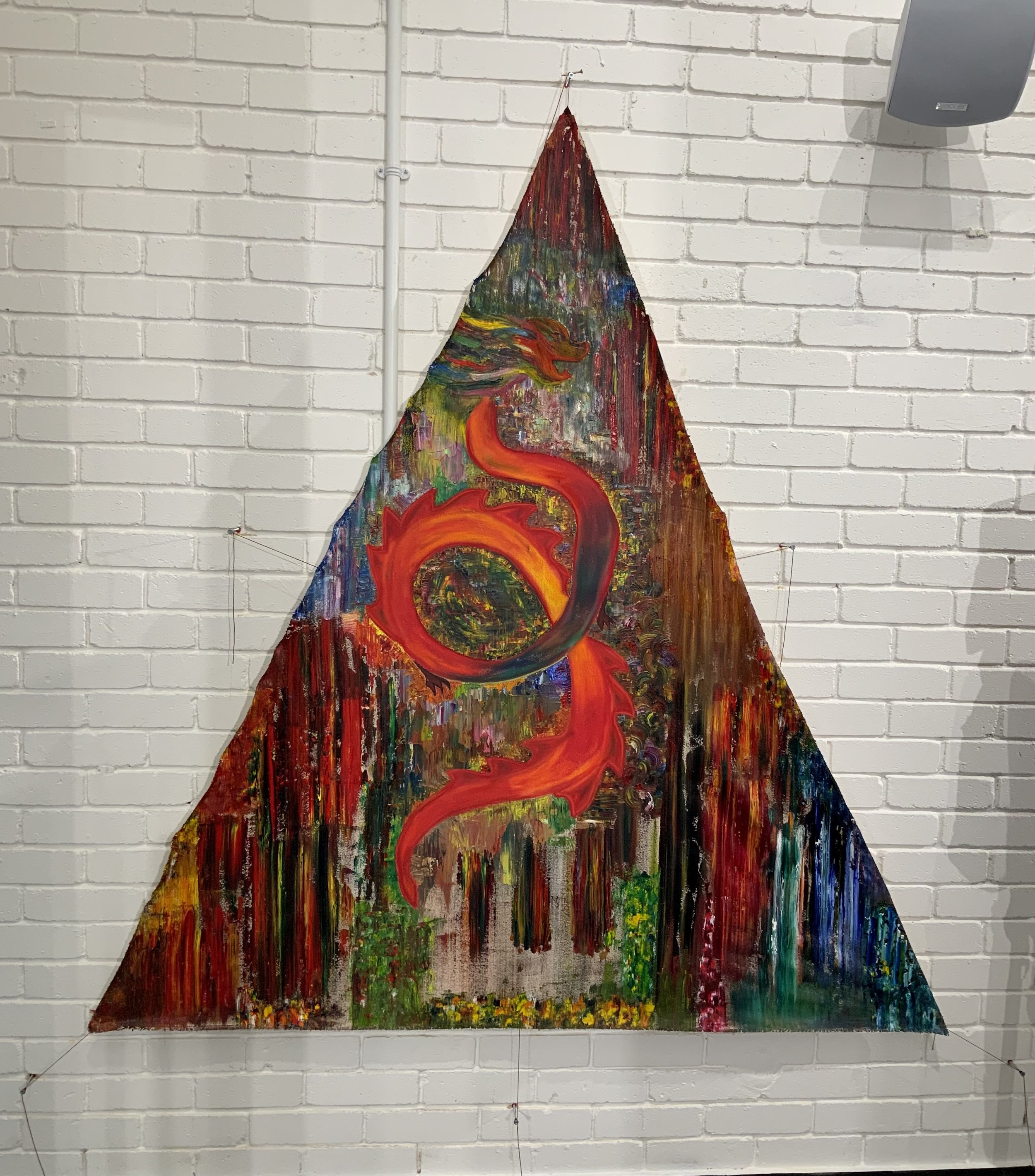
Singaporean
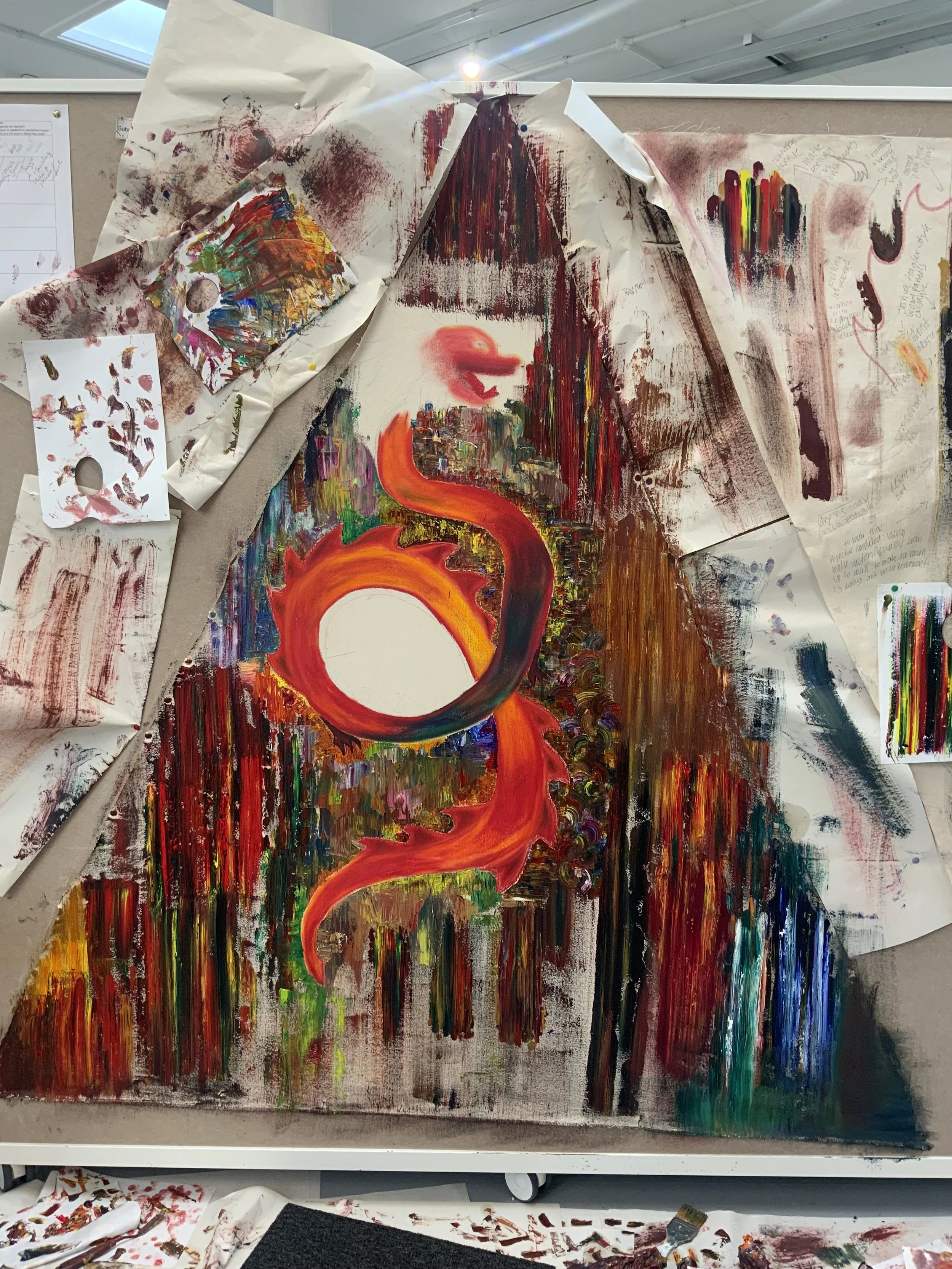
Oil on Canvas 175 × 166cm
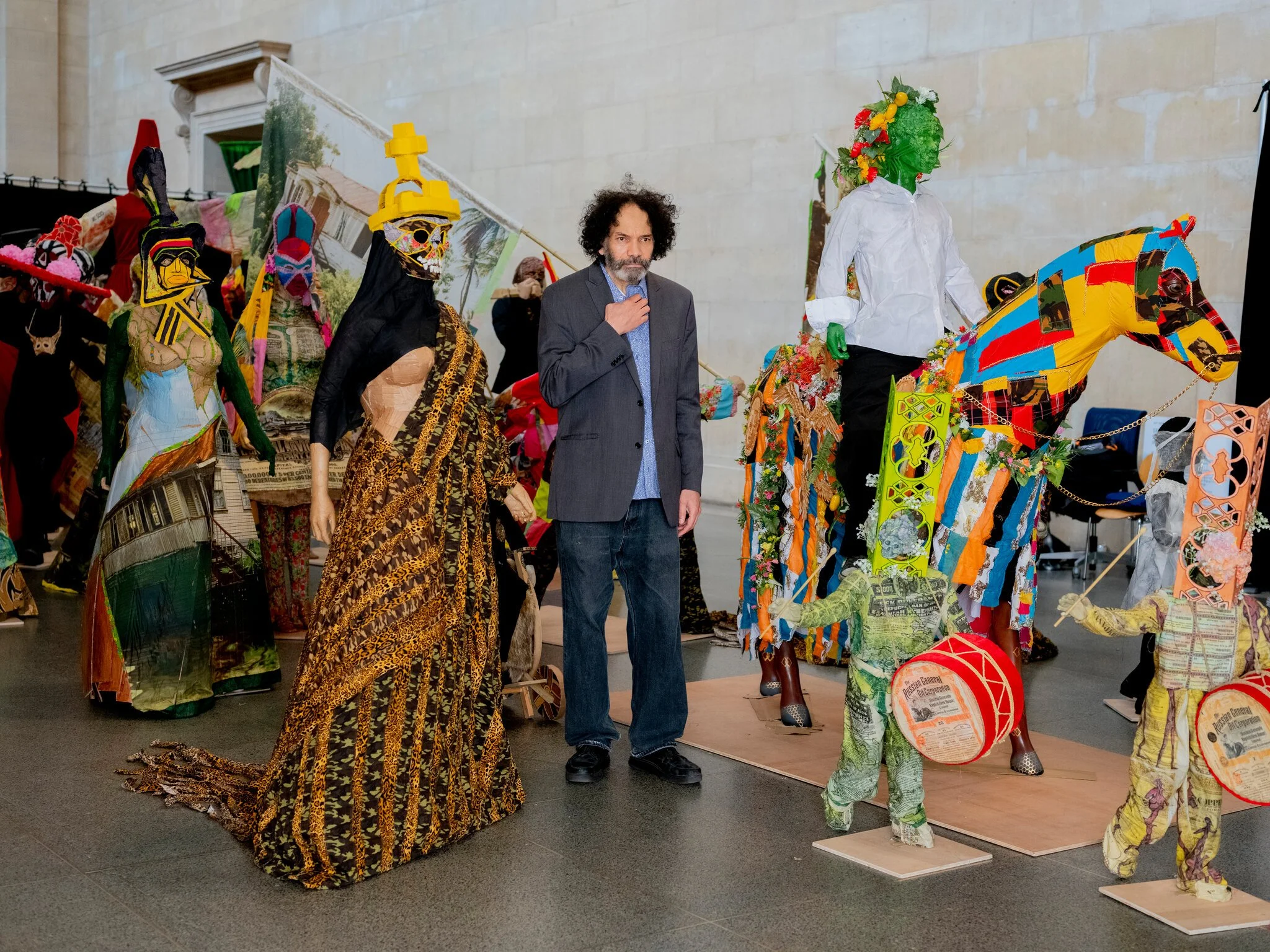
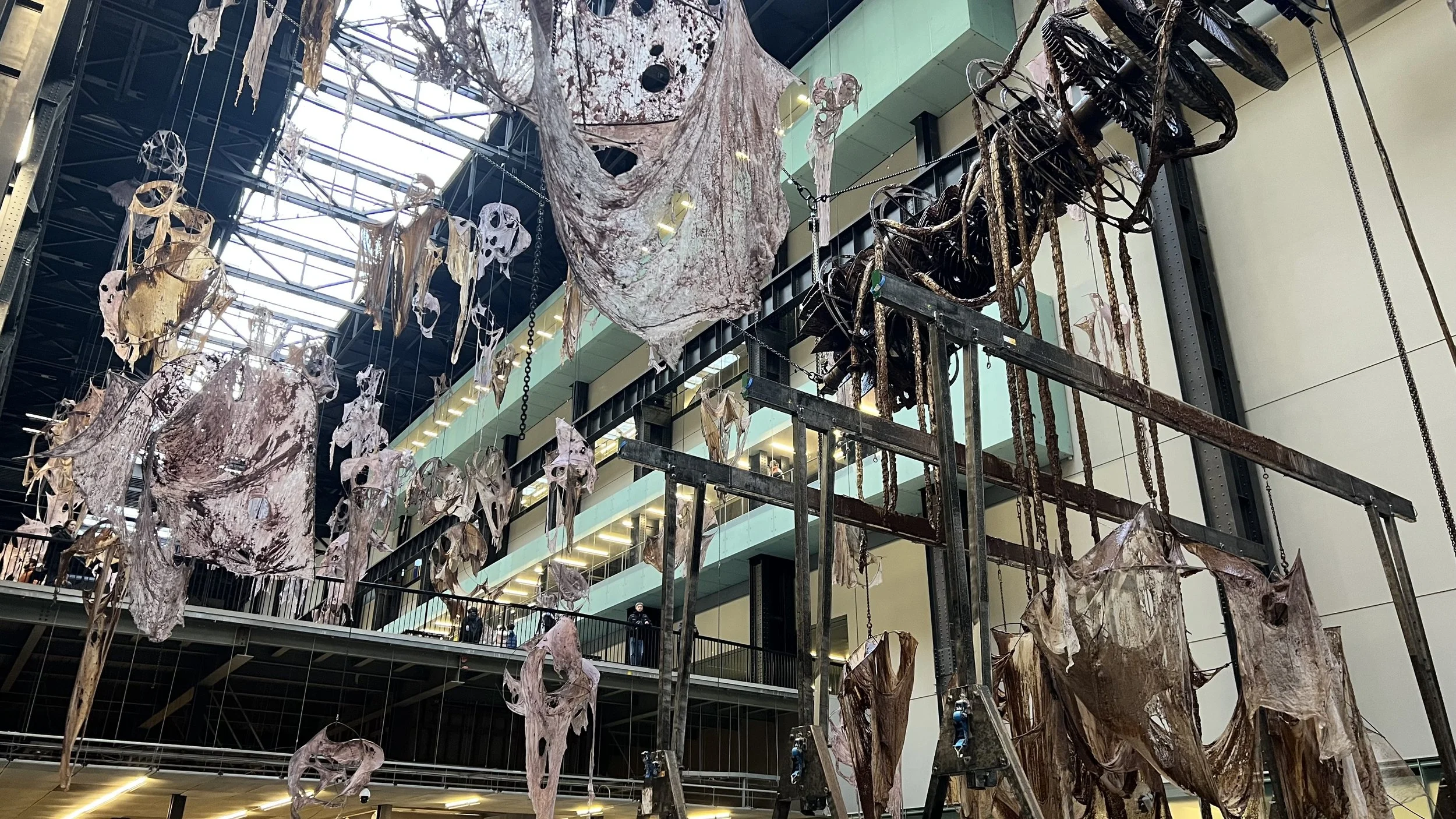
As I began brainstorming this project, I knew I wanted to work large-scale, and do something that would turn out to be physically demanding. This concept emerged from a dialogue approach with my teacher. Through conversations and annotations, I remembered my past visit to Hew Locke’s 2022 The Procession at the Tate Britain. His installation work presents over 100 life-sized costumed figures depicting the themes of migration and colonial history. As viewers, we are invited to walk through space and time, and engage in this cycle of life that grieves, celebrates, and protests against history. This experience inspired my chosen theme of belonging and my intention of making the viewer an active participer who is also part of the narrative. The idea of physical immersion was reinforced by my visit to London’s Tate Modern, where I experienced (for the first time) a repelling force from an artwork. What I saw triggered a bodily reaction that felt unnatural to me. I remember feeling overstimulated with claustrophobia, displacement and most shockingly, disgust. All I could think of was escaping that sonic cage I felt trapped in. Mire Lee’s Open Wound was difficult. The disfunction and rawness of the installation awakened a vulnerable part of me that I wasn’t prepared for. My state of contemplation allowed me to understand the artist’s intention and consider how I want to impact viewers with my work. Through this emotional hardship I learned the value in seeing art you don’t like. As a result of this reflection, I have come to the conclusion that Art isn’t about putting pretty things on a wall. Art is about encompassing individuals with emotion and triggering a reaction.
Although this experience was not one of admiration, I don’t regard it as a limitation because it served as a catalyst for my curatorial approach to this installation project. Similar to Mire Lee, I want to craft an environment that demands movement but that resonates a contrasting emotional effect; one that intertwines memory, childhood, relationships, migration and language to build an energy of belonging. Open Wound and The Procession have motivated me to move beyond the wall and create a spatial experience with works that embody a sculptural presence rather than standing as isolated pieces. As a result I began researching geometric forms until I came across a pyramidal shape. Unlike Mire Lee, I avoided fragmentation by exploring the architectural stability of a triangular shapes. Triangles have connotations of balance, strength and sharpness. Whilst adding dynamism to my work, they also stand as symbols of resilience and spiritual ascension. This shape spoke to me the most because I realised how its qualities would reinforce my theme of belonging and the monumentality of emotions that come with it. Additionally, I was intrigued by the multi-faceted quality of a pyramid, particularly how the faces function independently and yet come together to depict a unified story. This collectiveness crafts an interior and exterior perspective for the viewer, just like a tent does. This further emphasises my focus on audience engagement since it invites the visitor to walk around and appreciate each façade, but also enter the installation and feel welcomed and hugged by the artwork.
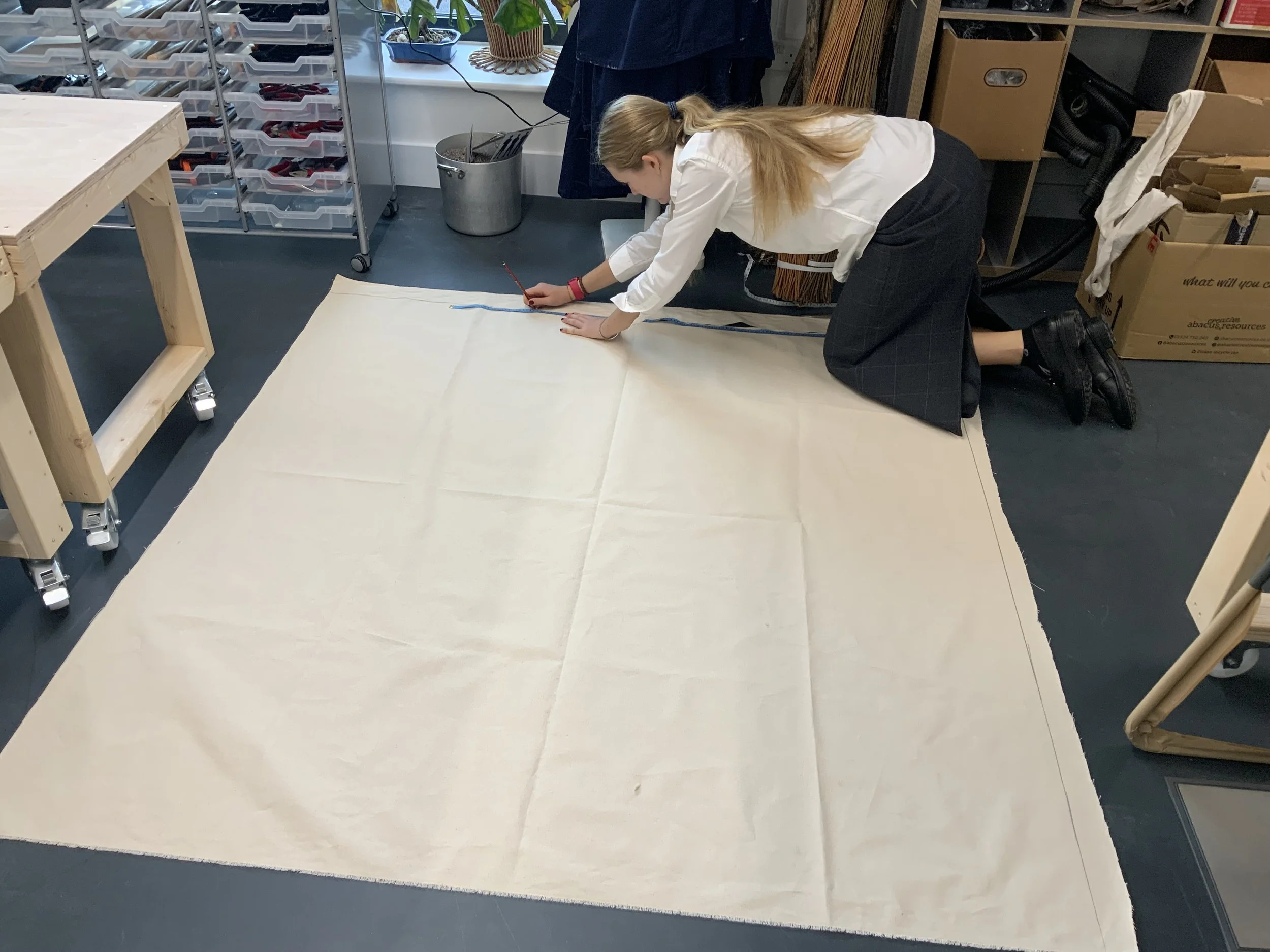
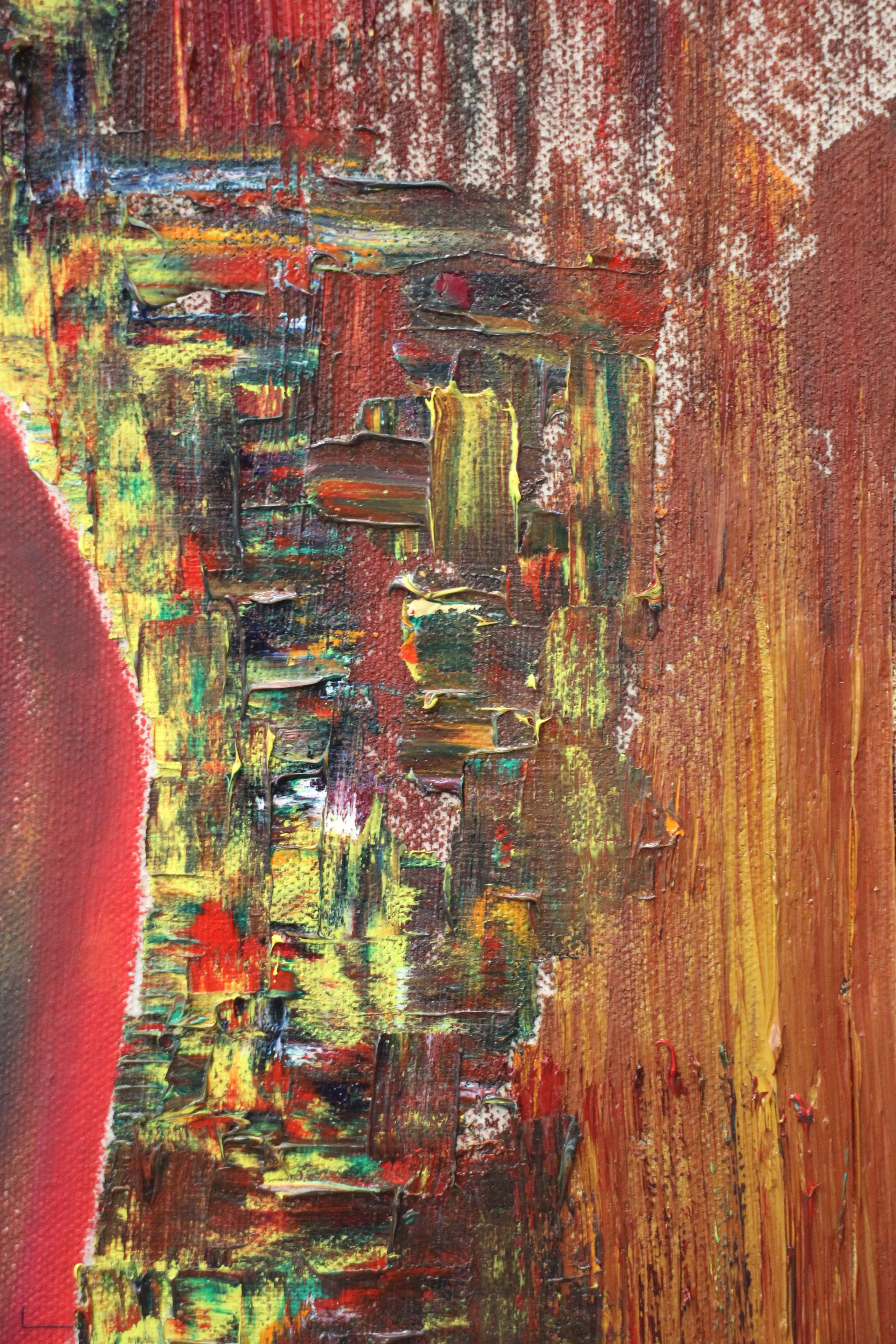
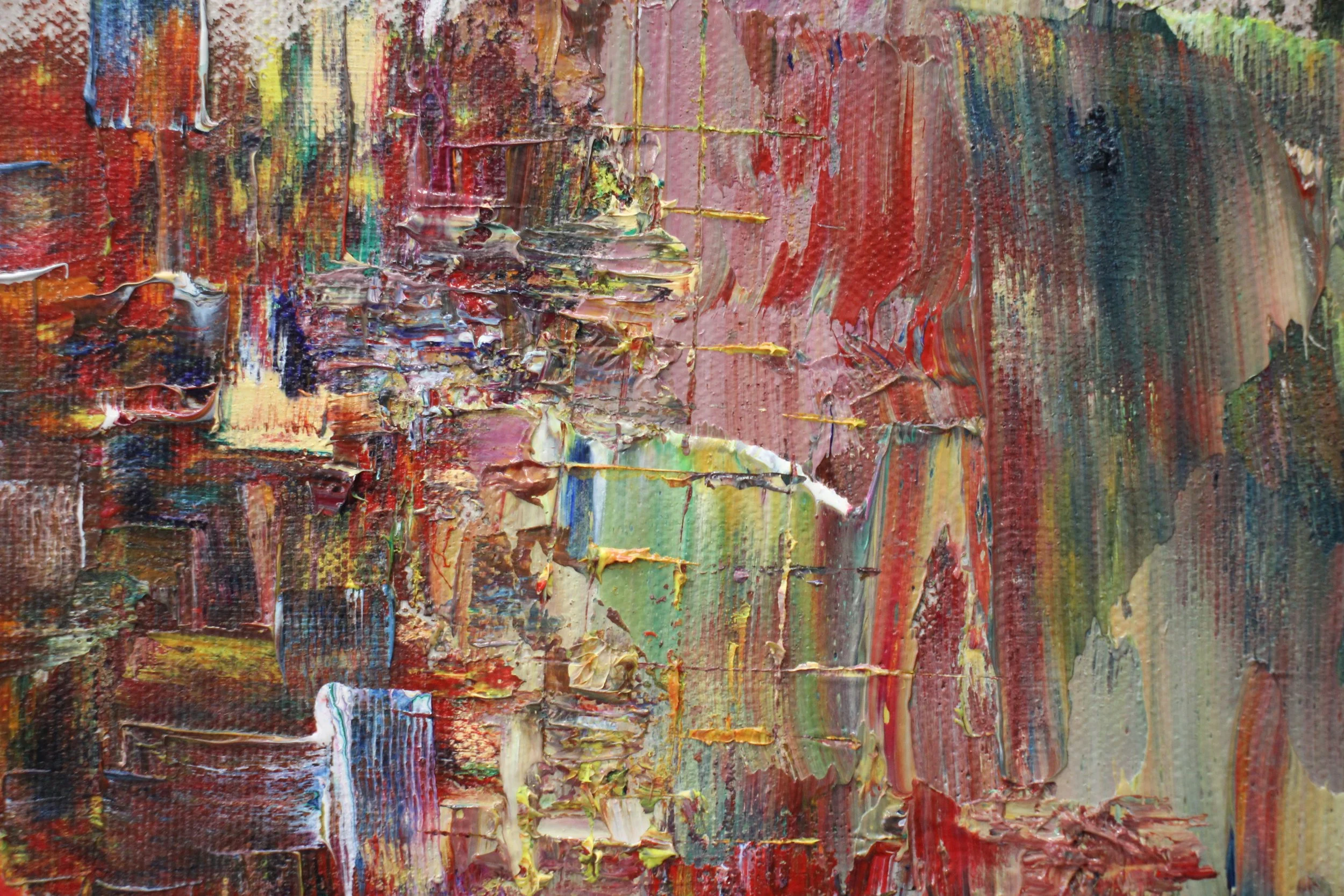
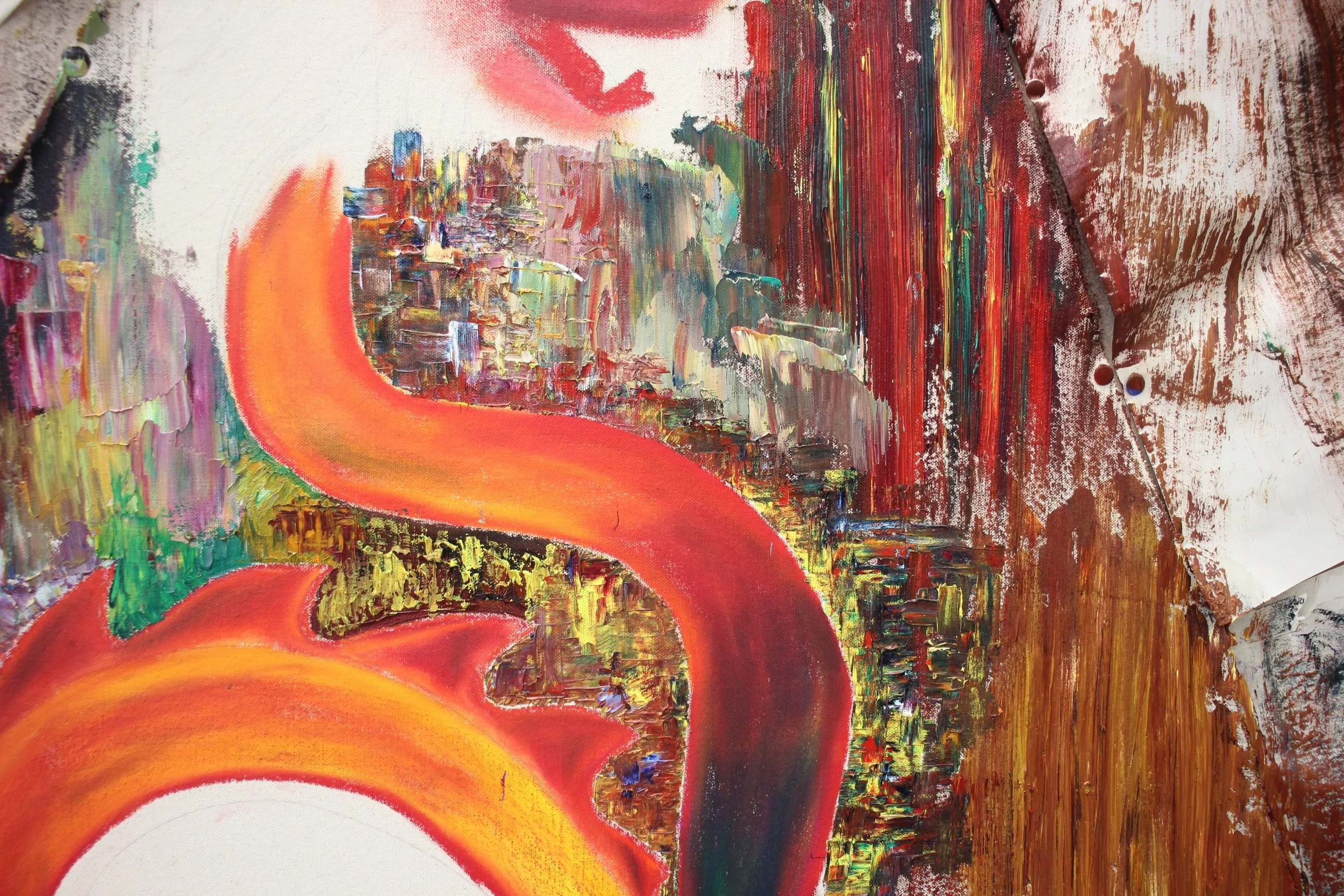
I encountered Gerhard Richter’s embrace of randomness in his oil paintings during my visit to London’s Tate Modern. I decided to adopt his technique of adding and removing paint to achieve a textured composition and reveal previous layers in my work. Unlike the artist, I avoided using large materials such as a squeegee because I had to prevent any paint from intermingling with the central dragon. Thus, I used smaller tools like palette knifes to achieve the same effect whilst maintaining the dragon’s clean and sharp presence. Gerhard Richter’s process is methodical but yet considers a random application of colour. By using different blades, scraping, mixing and blurring the paint, I was working at a constant addition and subtraction. I aimed to uncover the traces of my painting journey by interconnecting accident and intention. Embracing Richter’s technique meant having no control over the outcome. I had no idea how the colours would turn out, or how the movement of the paint would show on the canvas. However, this uncertainty lead the paint to permeate with a dreamlike quality.
At first, my ever-present fear of imperfections and misleading lines made it difficult to let go. During the process I accidentally scraped some paint off, leaving a quadratic-looking mark which I surprisingly liked. I then manipulated the remaining paint in the same way, leaving a rustic arcadian pattern. I now realise that it was these mistakes that made me forget about perfection. Observing this harmony in the fluidity of my painting motivated me to continue exploring this method. I felt intrigued to discover the unknown overall outcome. This skill taught me to prioritise the materiality of paint in order to emphasise the physicality of the medium. By reinforcing the process instead of precision, I have been able to appreciate the beauty that unpredictability brings. But most importantly, I have realised how paintings thrive without expectations or our inner critics. Even Picasso acknowledged that it took him a ‘lifetime to paint like a child’. What I value the most out of this process was the opportunity to reclaim the uninhibited spirit of childhood that we now often trade for the fear of being wrong. Instead of feeding into a lens of judgement, I exercised painting what I truly felt.
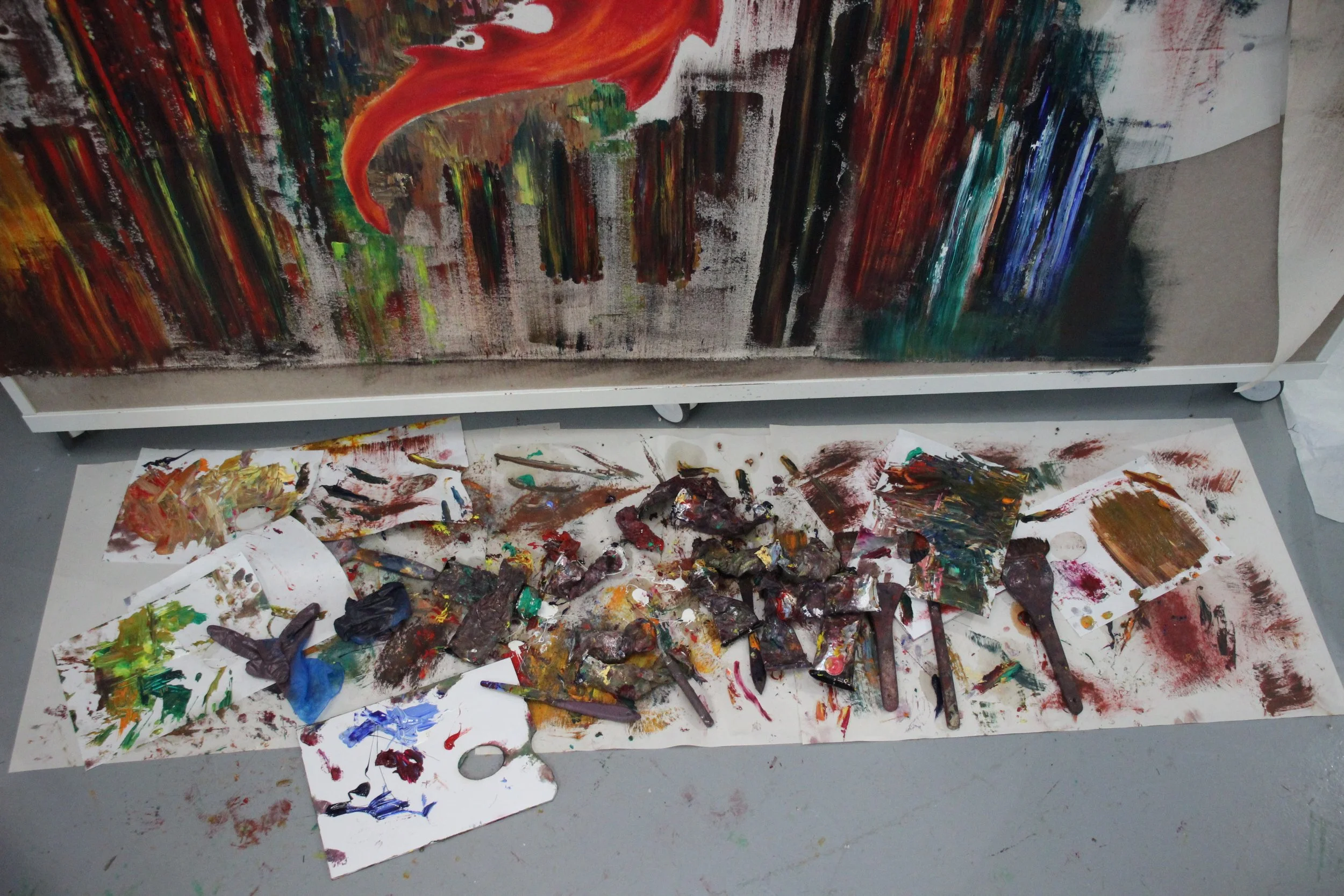
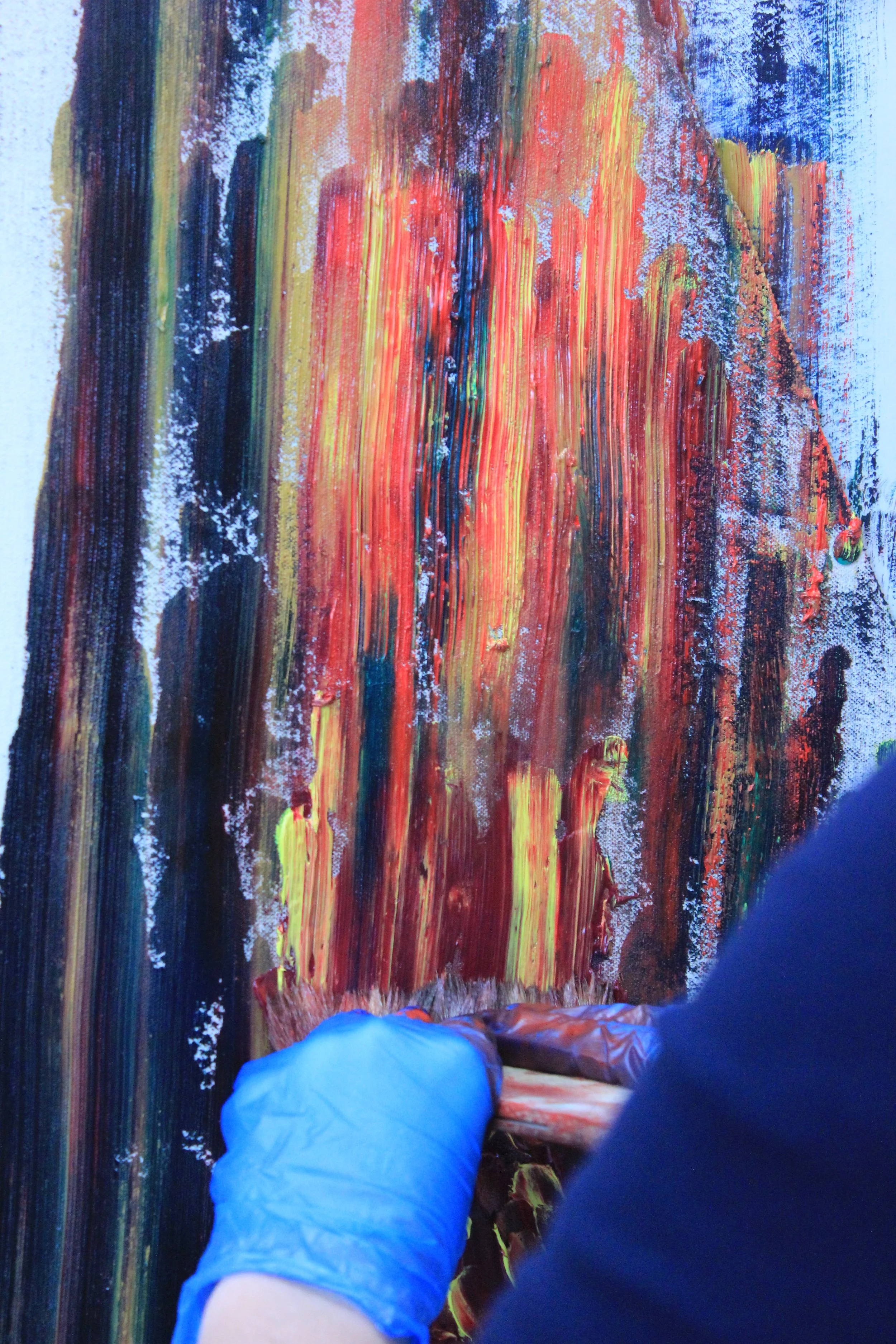
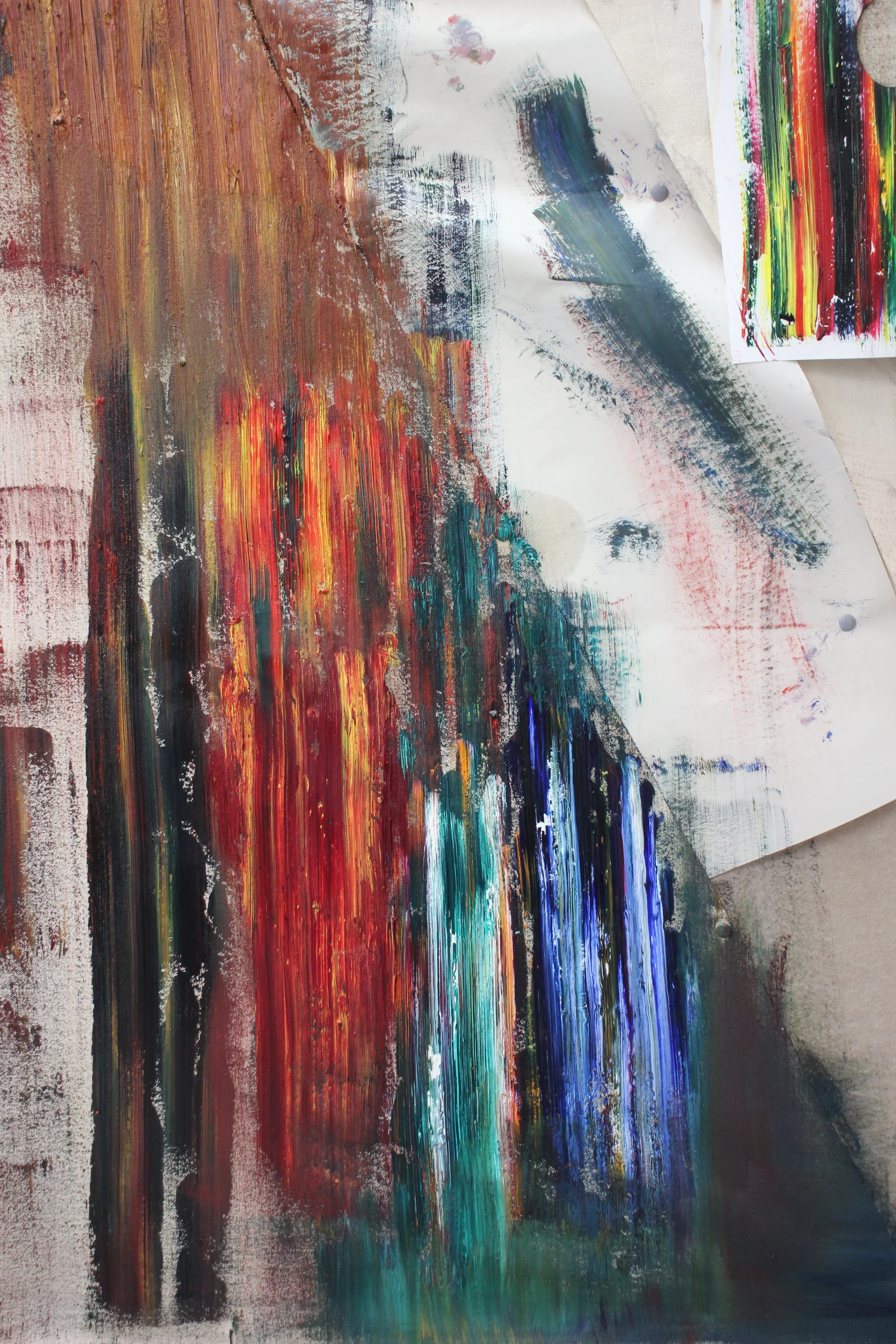
I value this project because its behind-the-scenes process marked a seminal moment in my personal artistic journey. In the past, I had always discarded my ability to paint, and therefore avoided exploring this medium. Thus, I decided to begin this project by stepping out of my comfort zone. I initially felt incredibly nervous and didn’t know what to expect of myself nor the outcome. Through this transformative process I proved myself wrong. One of the biggest challenges was confronting the blank space. To escape my negative mindset, I forced myself to splatter different colours of paint on the canvas and then dragged them down using a wall brush. By continuing these spontaneous actions, I found myself learning through making. New ideas came to me by embracing the ebb and flow of painting. I also realised how seeking perfection can become my greatest enemy. Especially with such a large-scale painting, planning every detail fuels those circular thoughts of doubt. Not only did I see a change in my work, but in my surroundings as well. When my space started to resemble the chaotic ecstasy of Francis Bacon’s and Maggi Hambling’s studio, that’s when I understood I had begun to let go of my inner fears. My space had come back to life; I was open to making mistakes that would lead me to new intentions, and I had finally escaped from drowning in doubt.
The contrast between my initial marks and the ones mid-process clearly depict my confidence transformation. Initially, the dragging of the paint appeared unsuccessful because I applied little paint and waited for too long, leaving the canvas look dry and depressive. This outcome led me to conclude that my constant hesitation was limiting and ultimately self-sabotaging. The solution was to let the paint speak for itself. I had to stop worrying about messing up, and instead focus on letting the paint breathe. In order to achieve a painterly texture, I played with my use of wall brushes, flat brushes and palette knifes, embracing the weight and density of oil. I also used bold primary colours to accentuate the central figure, and highlight the light coming out of it. This allowed me to let the process evolve and continue to follow the painting’s leads. I rejected any pre-conceived ideas, my only inspiration being the process in front of me. Moving my hands intuitively allowed my mind and body to become one in the act of mark-making.
Through every mark, I was surprised by what I had done. Each line was a new sense of direction, a new idea I would have never encountered had I not taken the risk of making a ‘mistake’. This project is most memorable to me because of its role in my emotional development. Painting has now become a branch of creativity where I feel that I belong in. Completing a large-scale oil painting was something my past self never thought I could do. By confronting my fear of painting, I ended up truly enjoying the process, finding freedom in unfreedom. Through this core part of my journey, I have come to realise that I am not alone. Insecurity and perfectionism are obstacles that all artists endure at one point or another. This observation became particularly significant after reading Reiko Tomii’s visual essay on Yoko Matsumoto’s decades-long experimentation with oil paint. I felt that I could relate to her struggles. Just as Matsumoto stated, I also wanted to ‘create a painting with no constraint and move my hand freely to my heart’s content’.