Sagrada Família
Mixed Media Installation 230 × 230 × 100cm
During my visit to the Sagrada Família, something extraordinary happened. It is the kind of moment that people often find hard to believe or dismiss as exaggerated when heard secondhand. Yet, these rare revelations belong truly to a select few; the artists themselves who live them, and those fortunate enough to witness their silent unfolding.
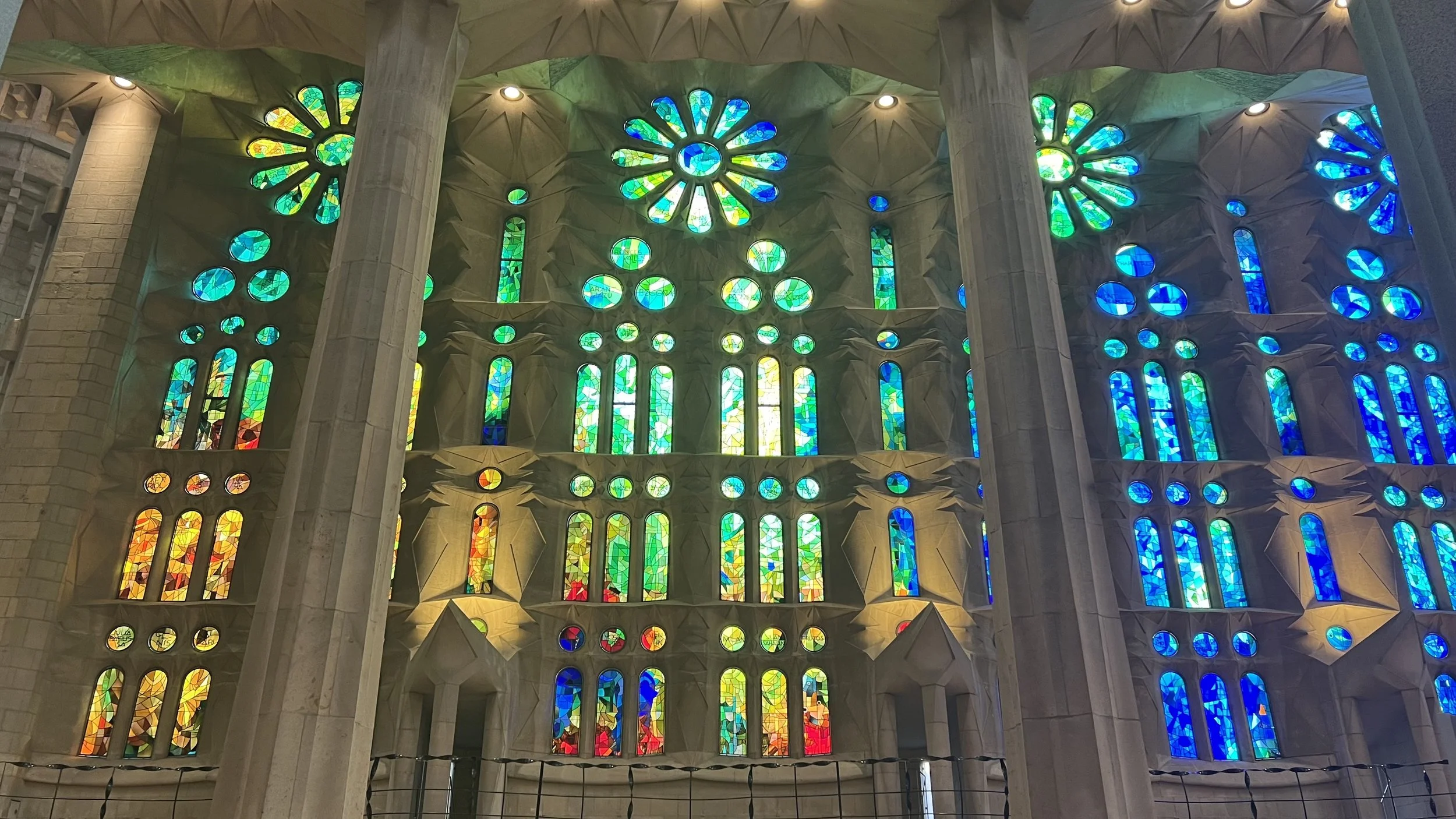
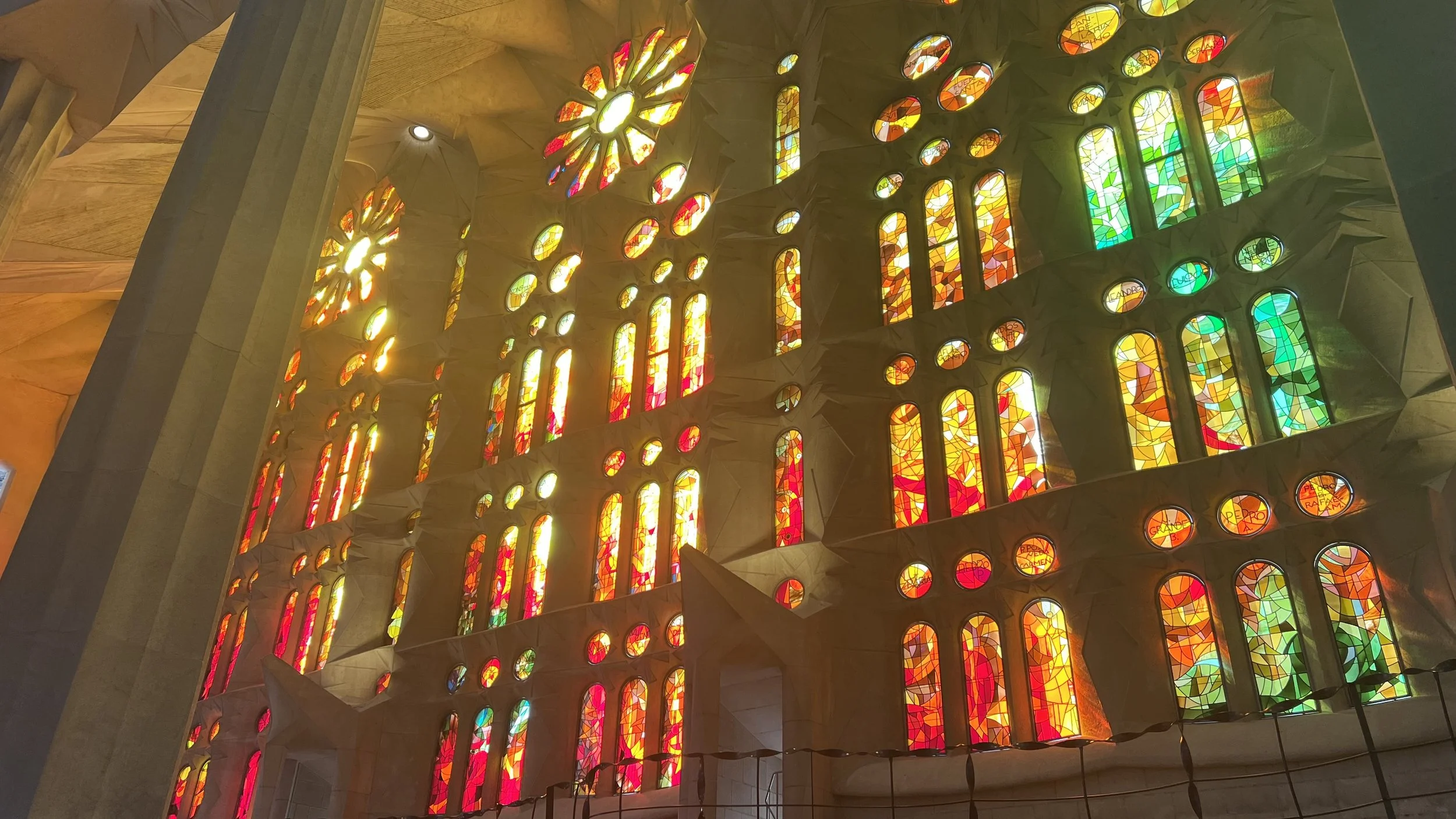
Gaudí’s Sagrada Família, the greatest exponent of Catalan Modernism, presents a dichotomy between its interior and exterior world that encapsulates a celestial and sacred milieu. Stepping inside, I was completely transfixed by this division. As the sunlight poured through the stained glass, it seemed to chemically shift, transforming the physical space into a living musicality of color. In that exact intersection of light and shadow, the vision hit me instantly. The entire artwork flashed before my eyes, perfectly formed. I knew exactly what I needed to build. What you see below is the journey of capturing that euphoric, electric realization and translating it into physical form.
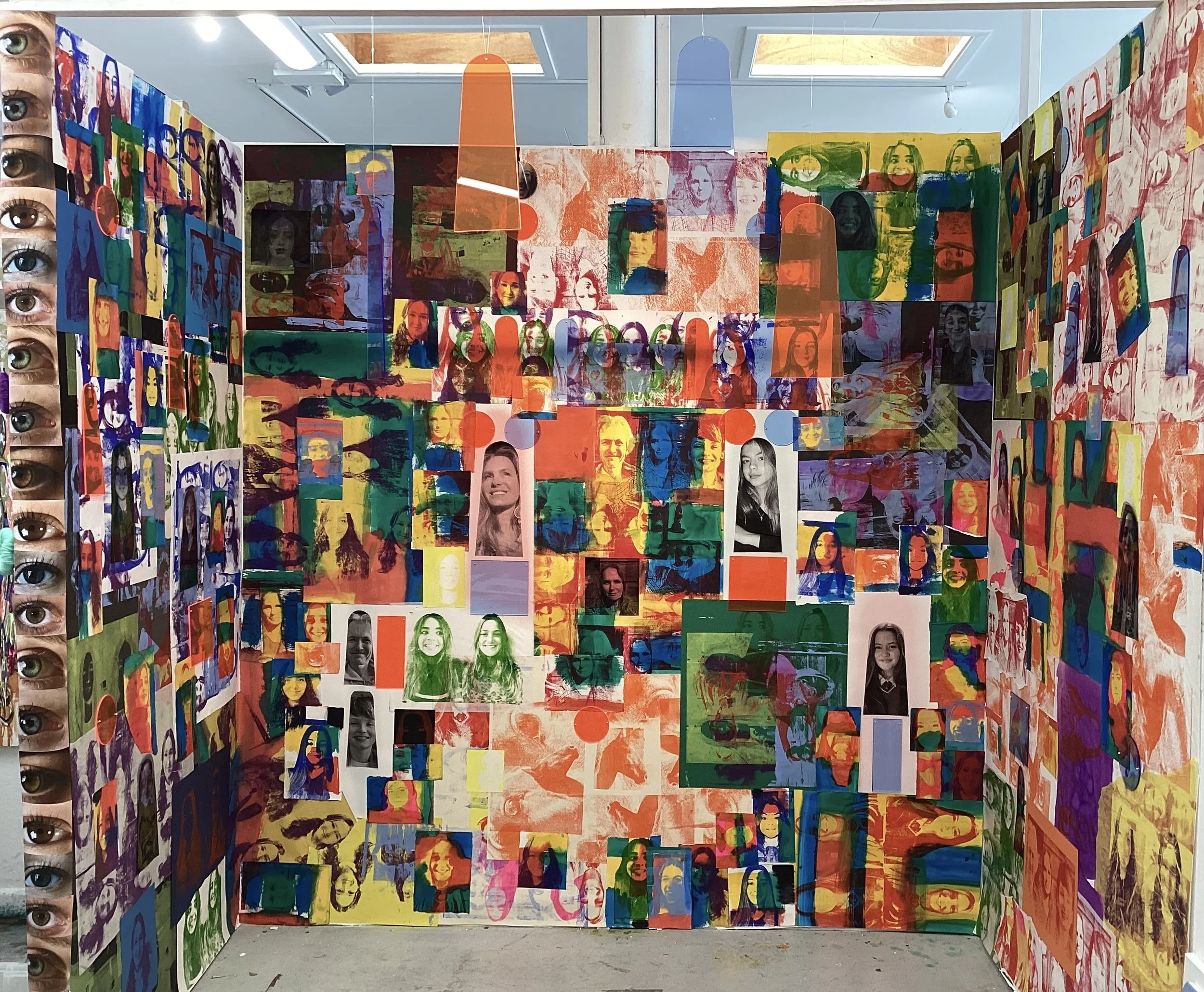
This installation work is a 3-dimensional tapestry inspired by the Sagrada Família in Barcelona, specifically the stained glass windows on the Nativity and Passion façades. The left wall consists of cooler colours contrasting the right with warmer tones, presenting the centre wall as blend of them all. I was most inspired by the biomimicry in this visionary structure. The masterpiece celebrates the transcendent relationship humans form with the natural world in the style of Art Nouveau and futurism.
Translating this architectural emblem into a grand-scale installation required a rigorous study of Gaudí’s orientation and Joan Vila-Grau’s masterful palette. To capture that dynamic, kaleidoscopic effect, I had to deeply analyze how the church’s cardinal orientation dictates its illuminating color gradation. Ffom the cool, misty cyans of the eastern sunrise to the explosive, amber-magenta tones of the western sunset. Following Gaudí’s philosophy that "the sun is the best painter," I eschewed flat paints and instead studied Vila-Grau’s use of layered glass thicknesses and diverse, irregular textures that naturally decompose and refract light. My process became a meticulous calculation of directional illumination and polychromatic harmony. Replicating this unified "togetherness" at a grand scale allowed me to recreate that exact synaesthetic experience, transforming three plain walls into a living entity of emotive light and philosophical introspection.
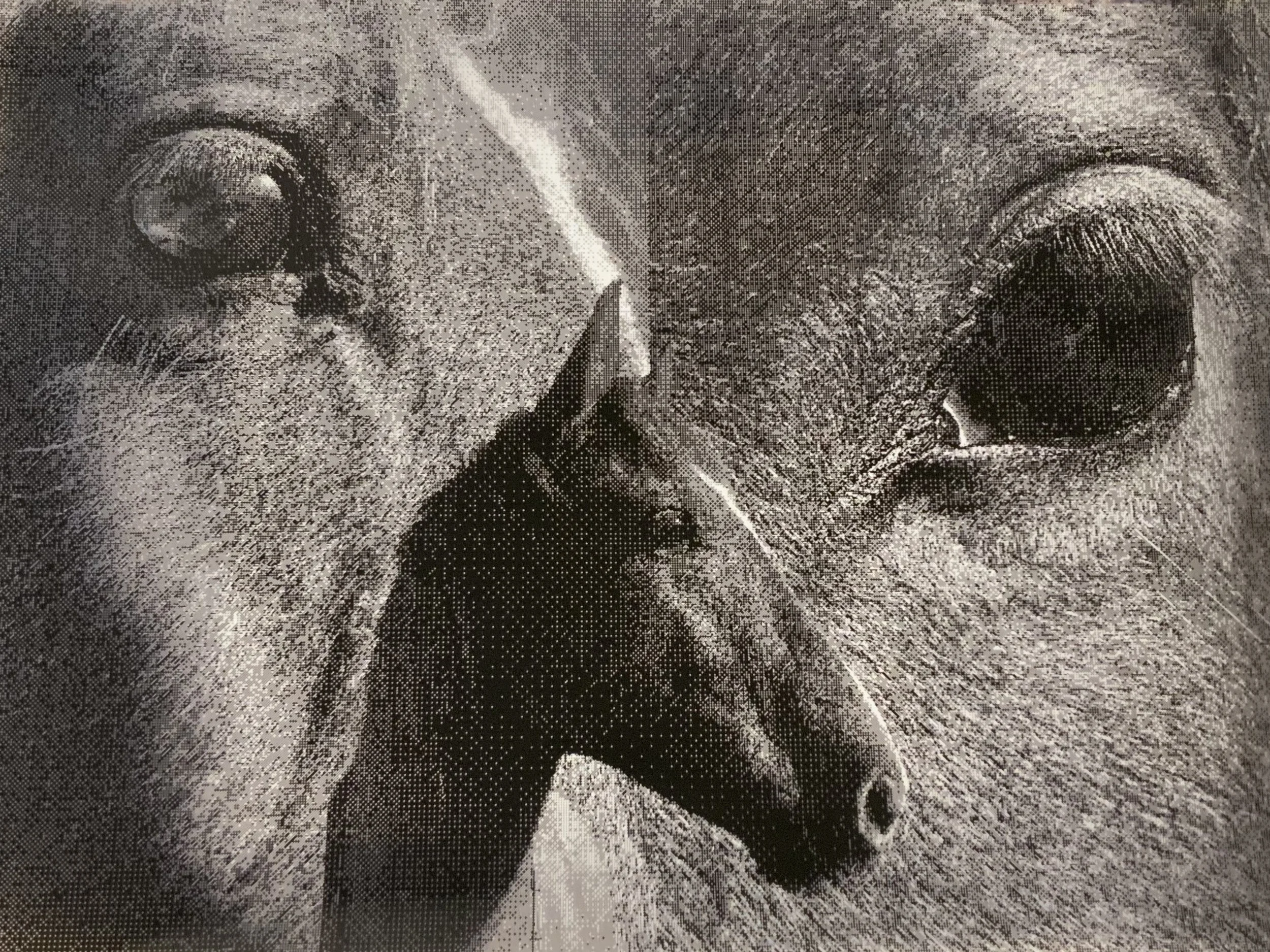
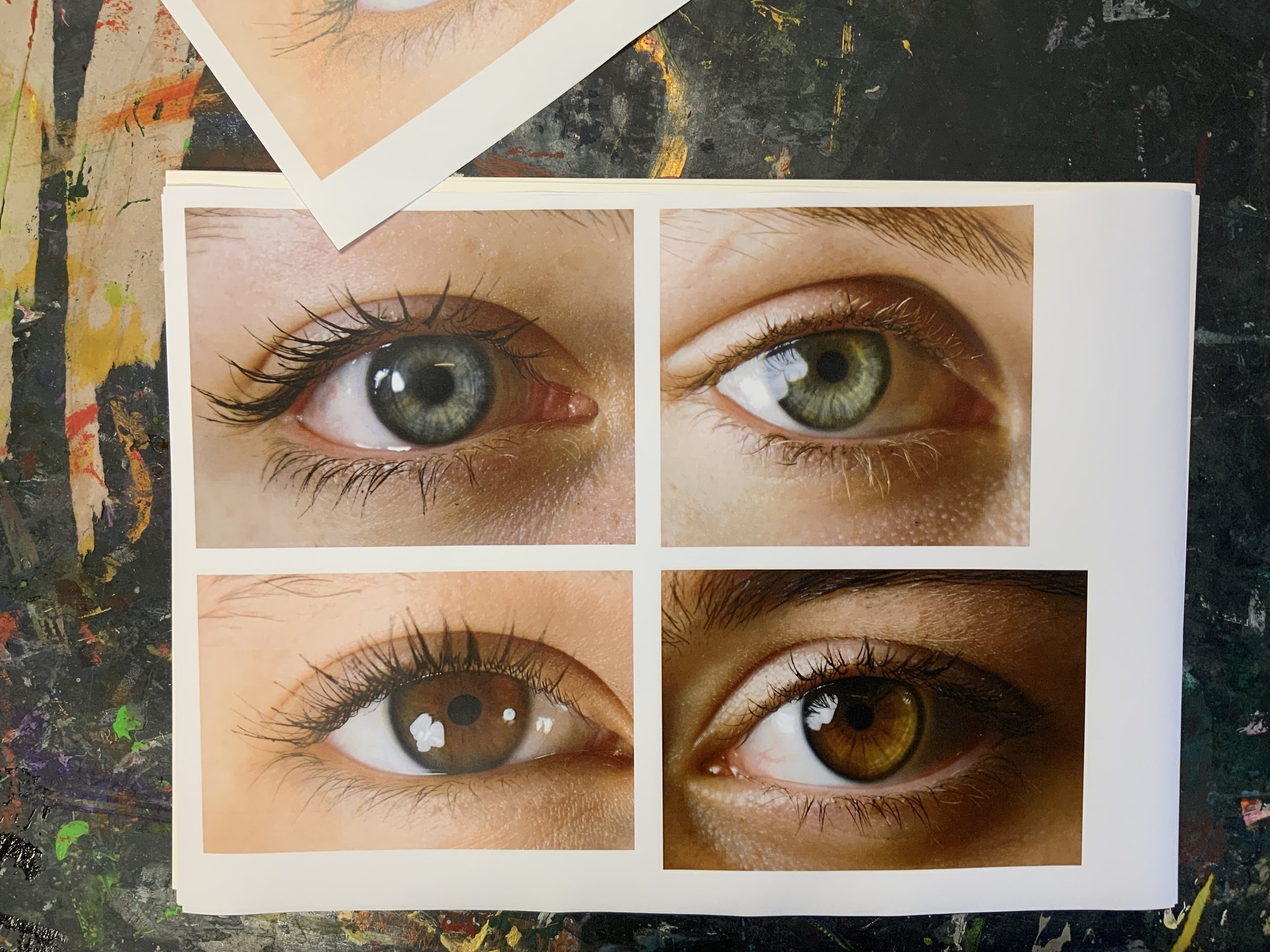
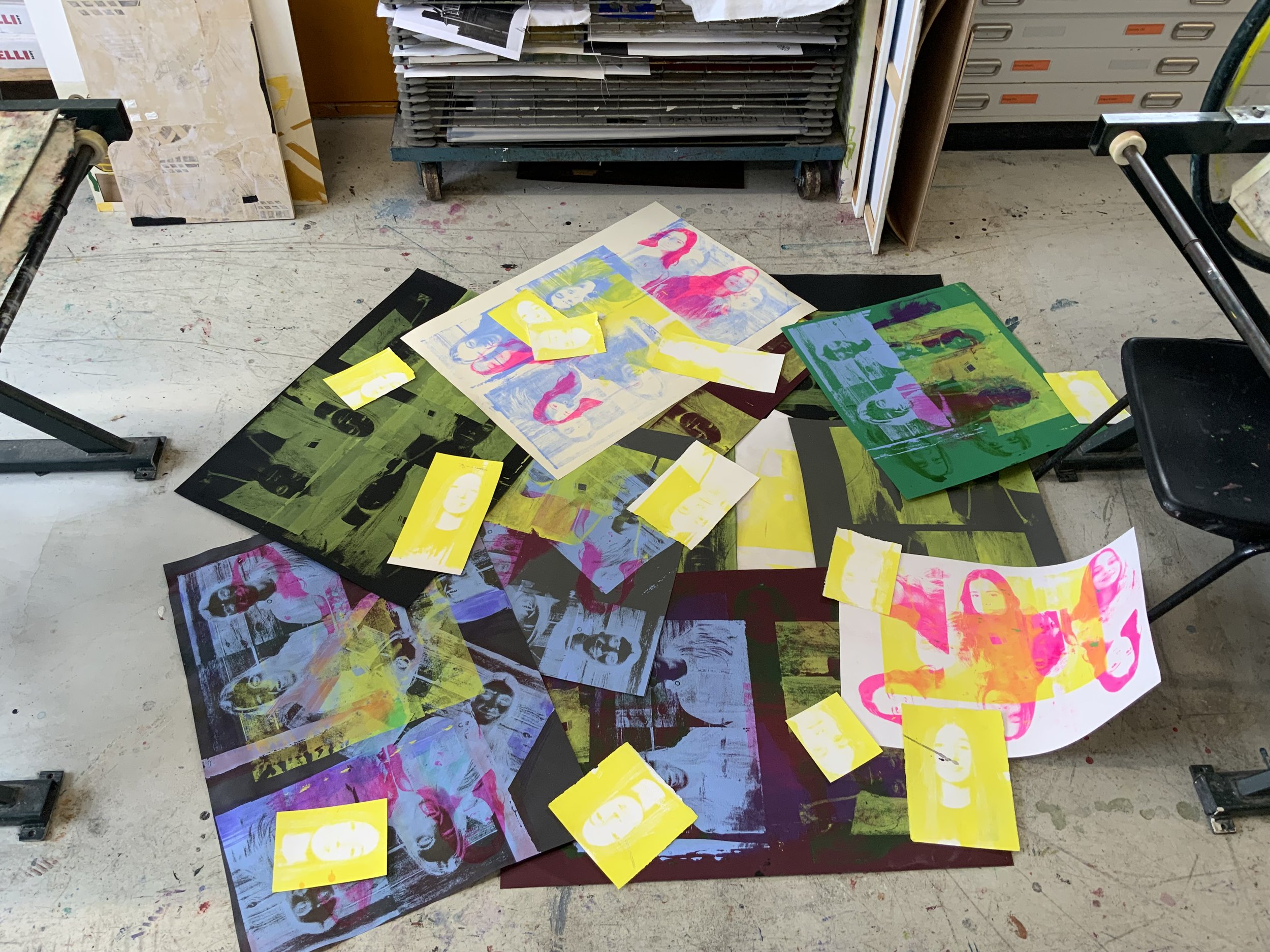
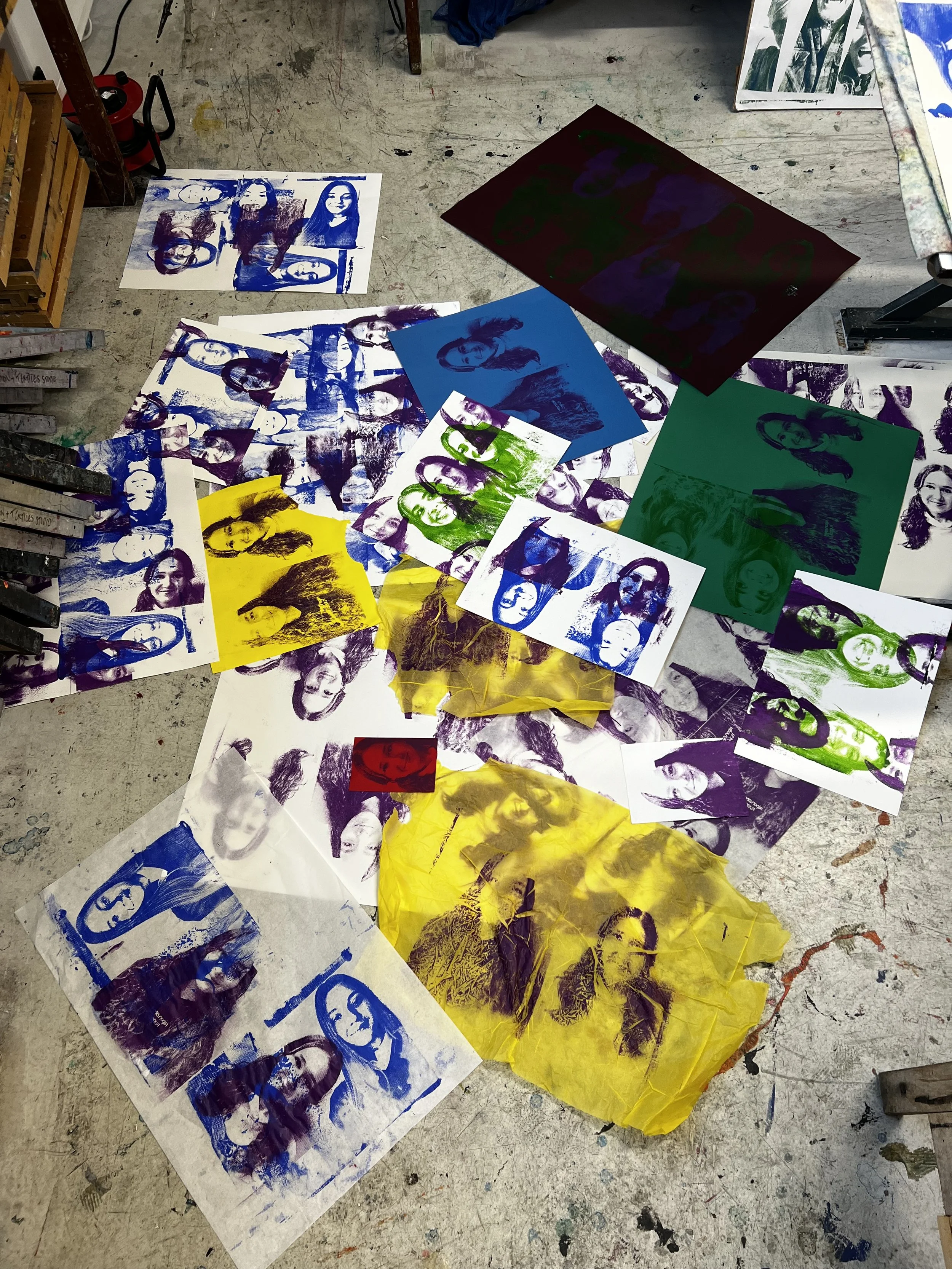
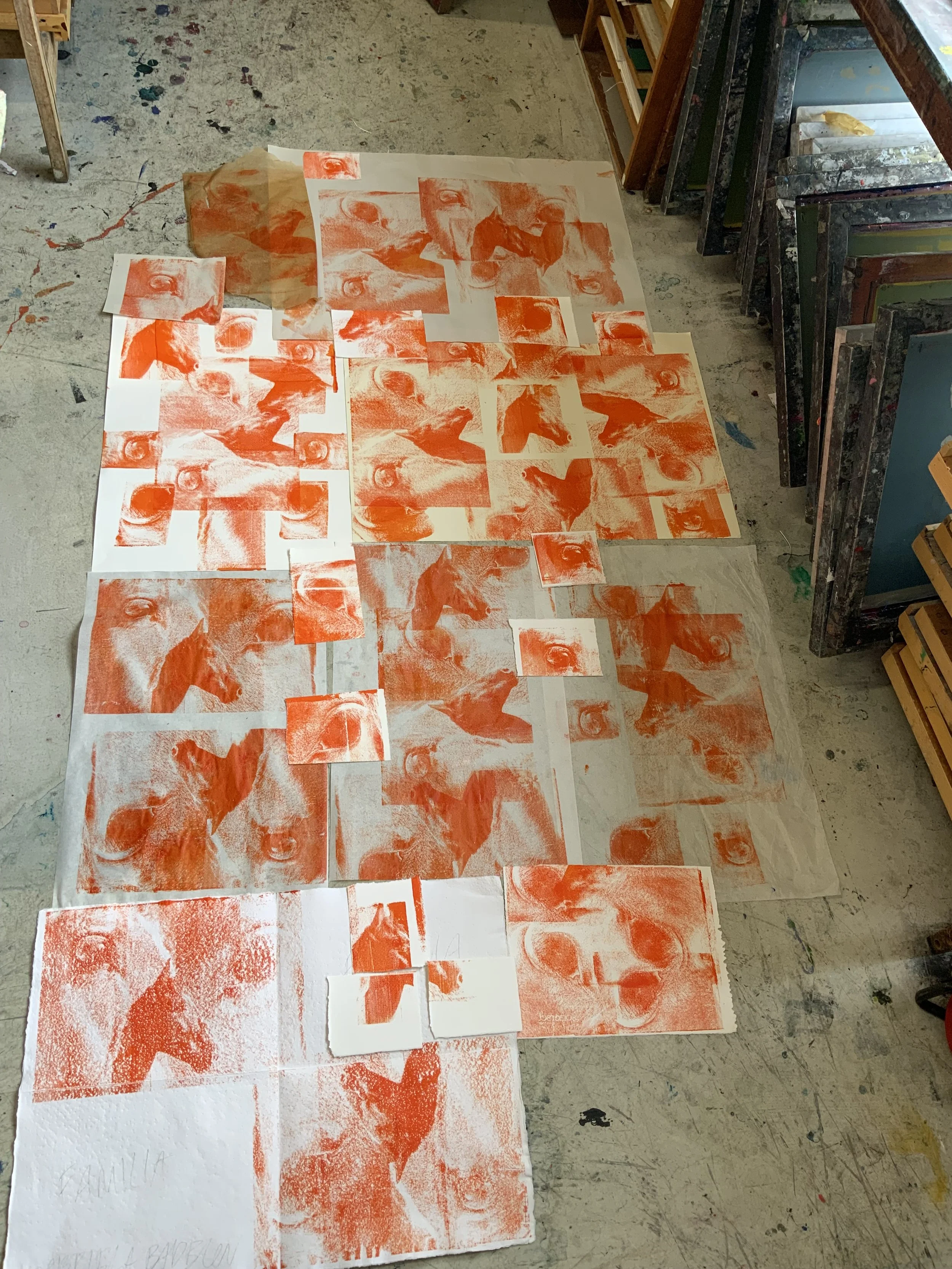
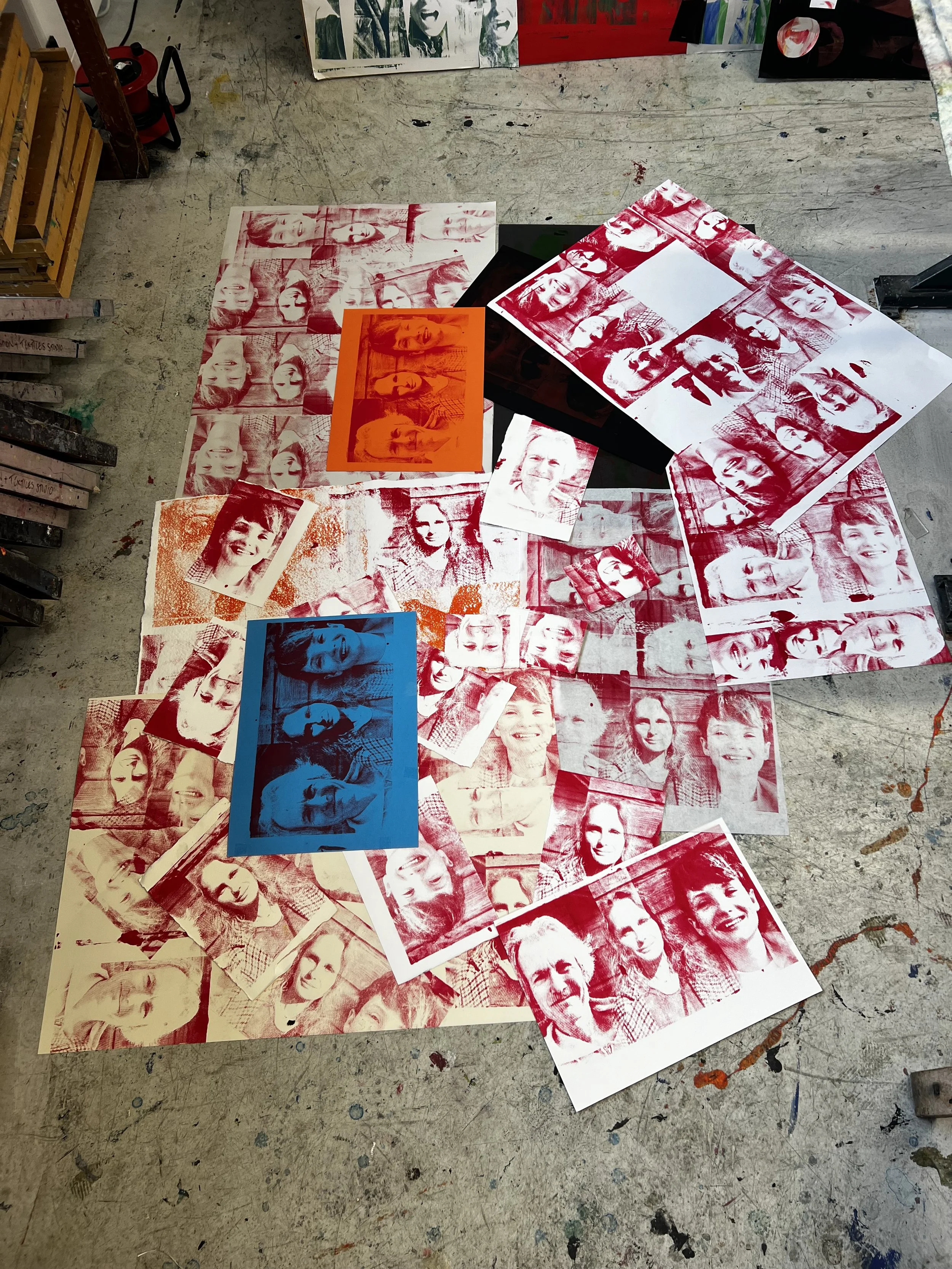
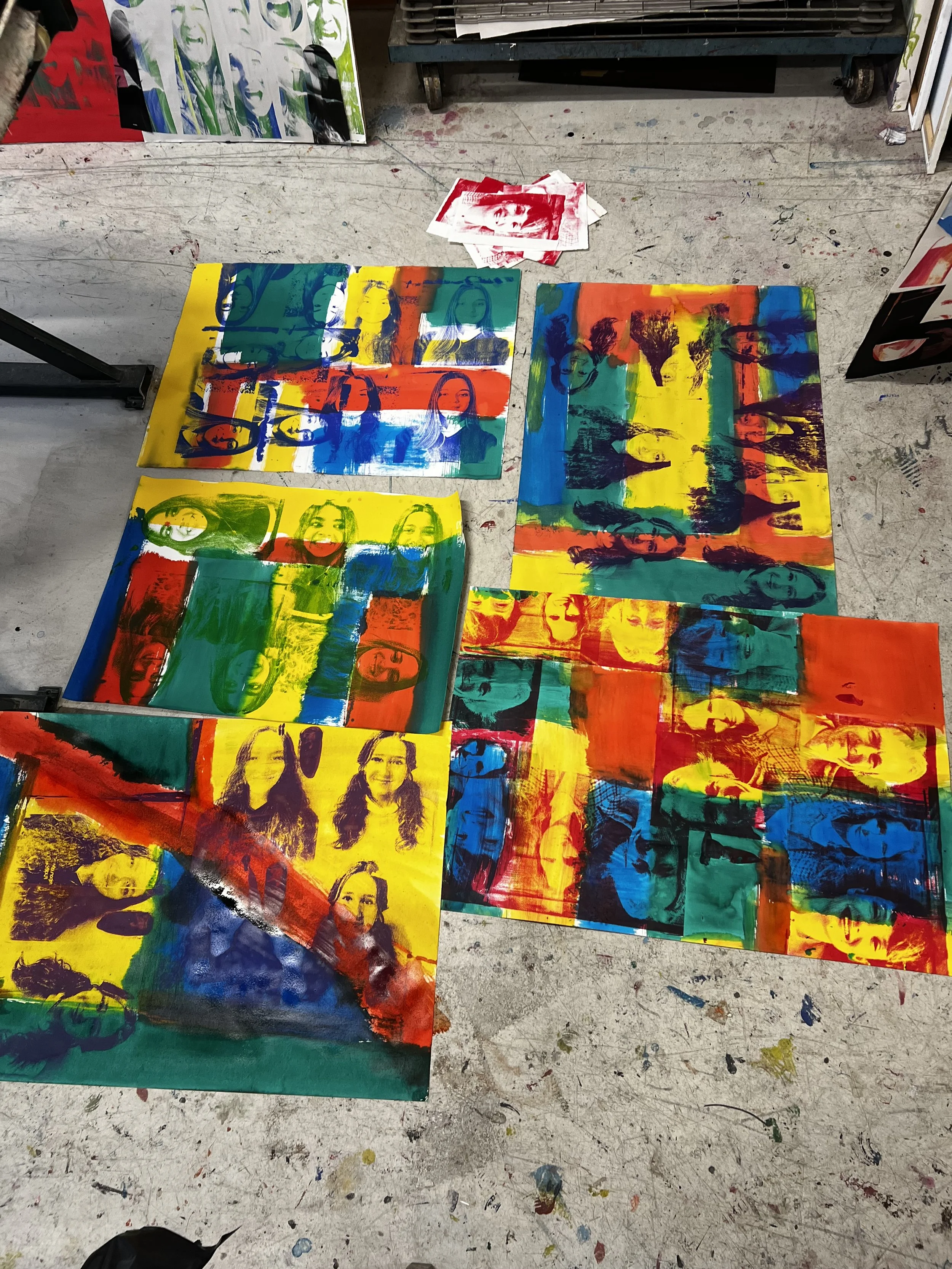
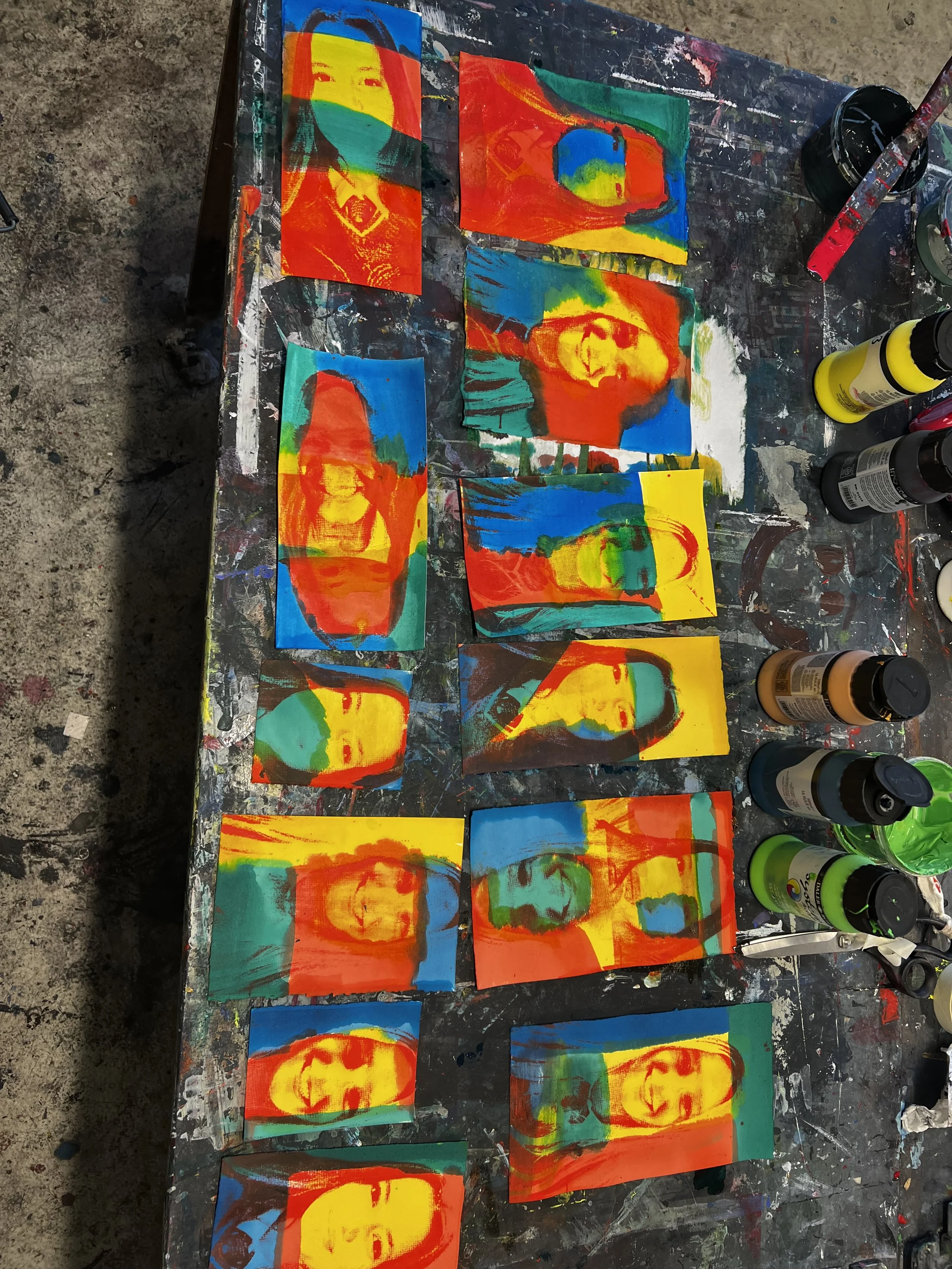
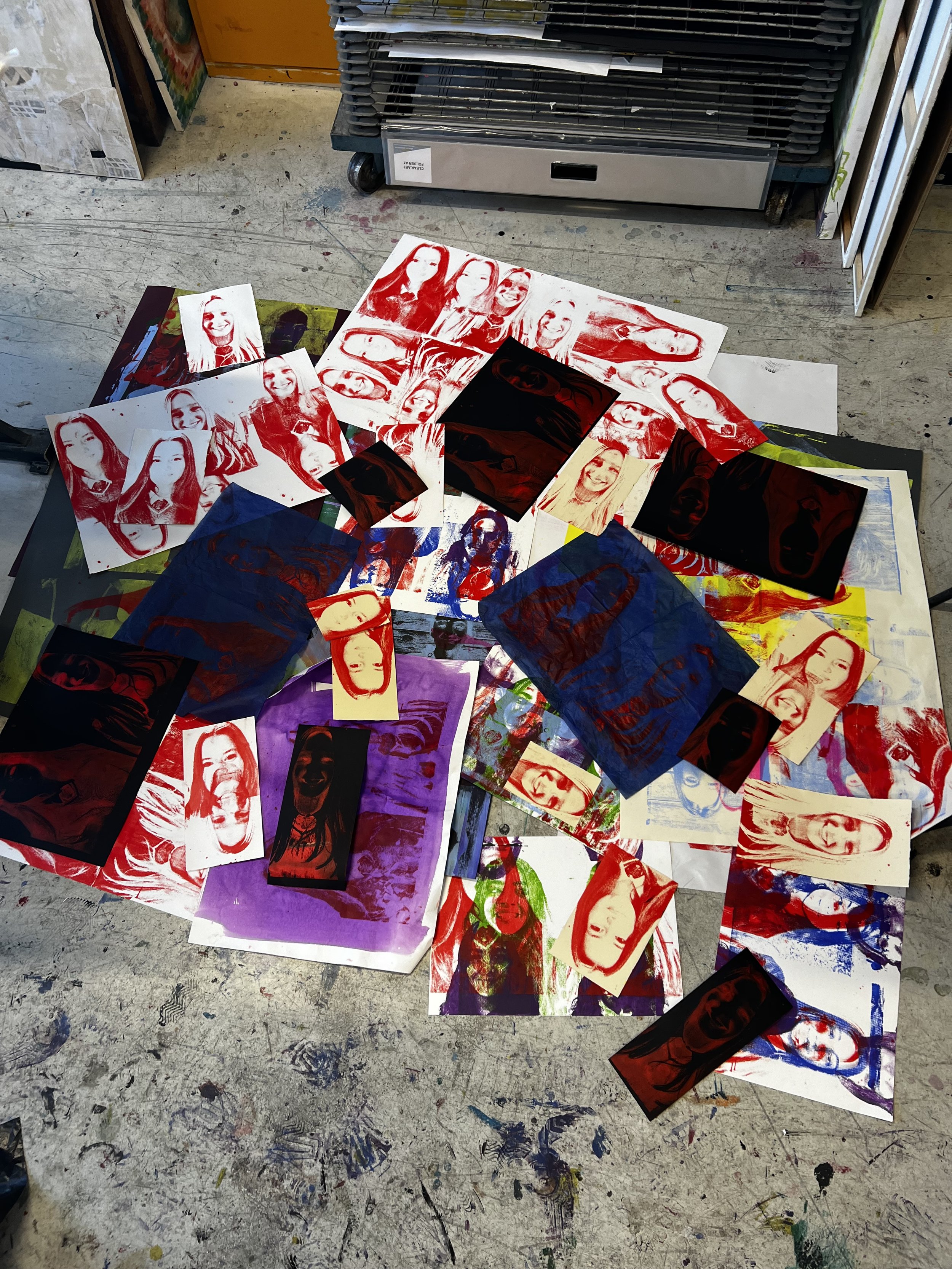
Rooted in the themes of connectivity and collective memory, this piece utilises the layered texture of screen printing to map the architecture of human relationships. The artwork brings together the faces of friends and family, the anchor points of my own community; blending their portraits into an overlapping collage of repetitive features and expressive eyes. By treating the eye as a direct window to the soul, the composition invites the viewer to read the silent, raw emotions of my loved ones.
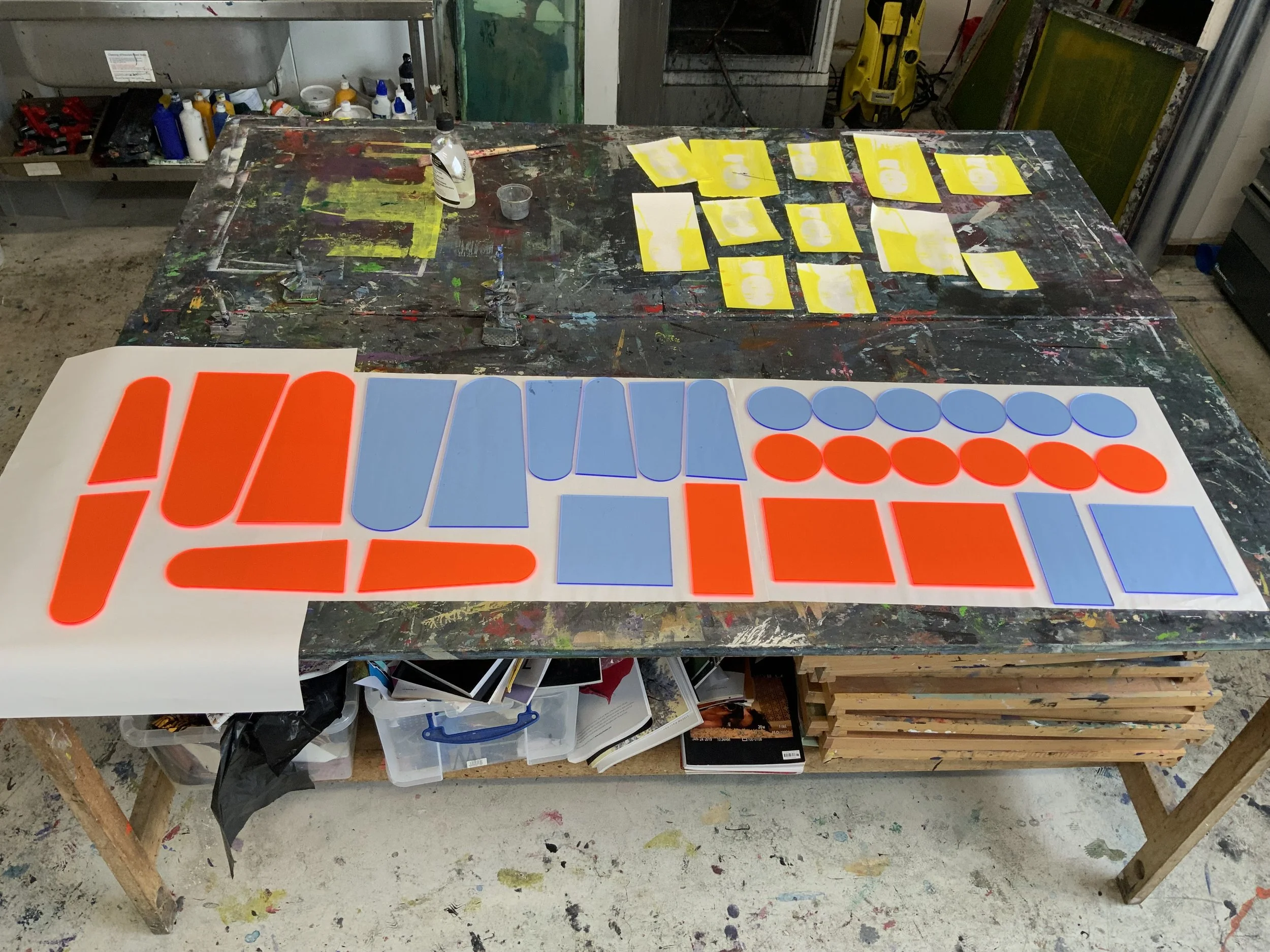
Driven by a pop art influence and a traditional mixed-media essence, the work juxtaposes abstract shapes, photography, and textured materials to create an intense sense of movement. A vivid, intentional color palette charges the canvas, generating a luminous atmosphere of pure euphoria and dynamic energy. Ultimately, the piece functions as an exploration of identity and diversity, capturing the beautiful, harmonious complexity of the people who shape my life.
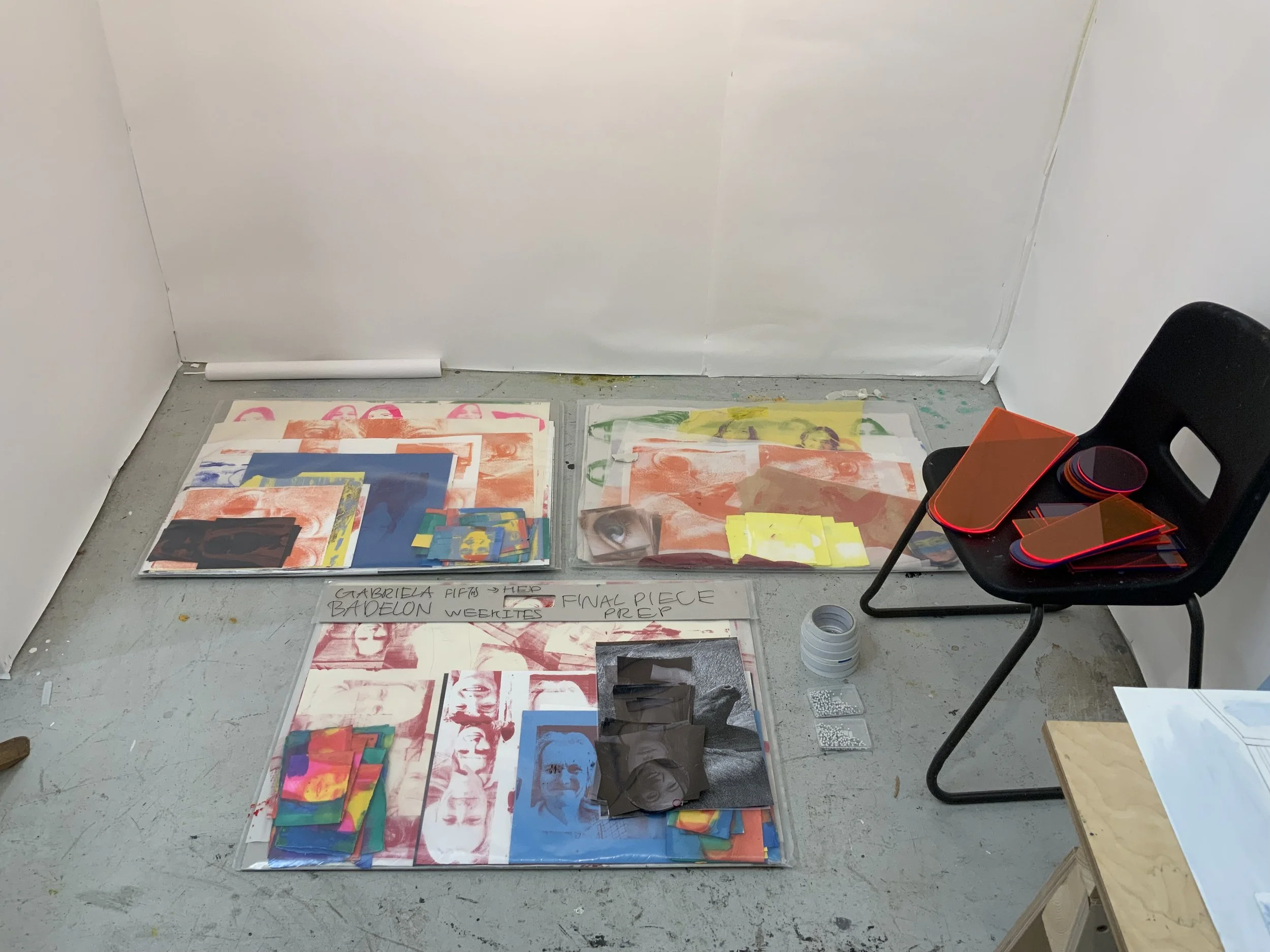
Bringing this vision to life required months of tactile production before the physical structure could even begin to take shape. The process began in the darkroom and the studio, spending months exposure-printing acetates onto light-sensitive screens and meticulously pulling hundreds of screenprints. I experimented with a vast array of styles, color palettes, and exposures; deliberately building a massive archive of raw material to act as the building blocks for the collage. This exhaustive library of prints allowed me to layer and mimic the complex, dynamic transparency of stained glass.
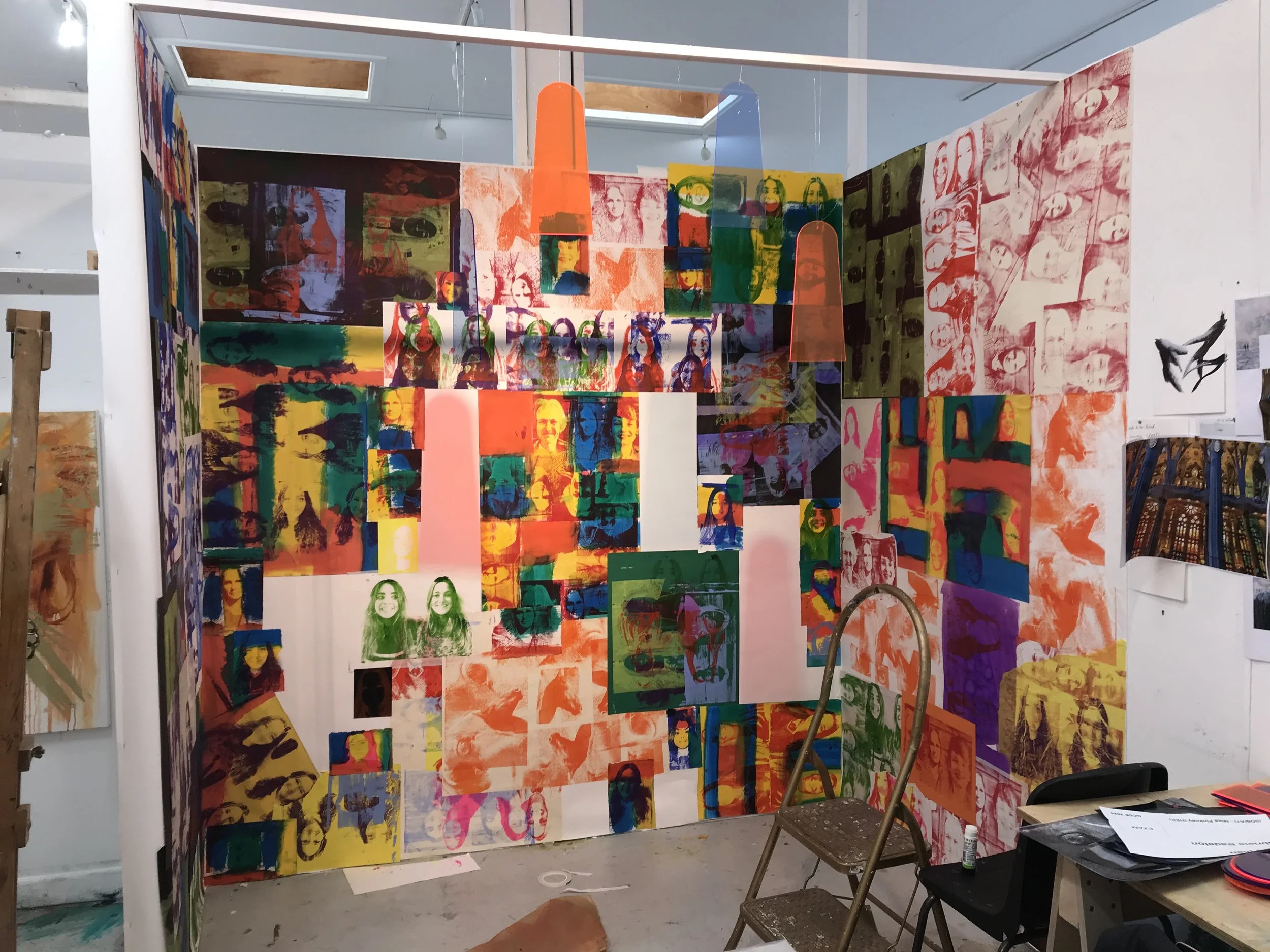
The final phase was an intense, ten-hour feat of physical choreography. Transforming a flat archive into a three-dimensional environment meant spending hours suspended in the space. I was hanging panels, overlapping textures, and intuitively deciding where each face, eye, and column of color belonged. Every placement was a real-time negotiation of light, shadow, and scale, ensuring the final wall-to-wall installation hummed with the exact euphoric energy I had envisioned during my visit to the basilica.