DNA
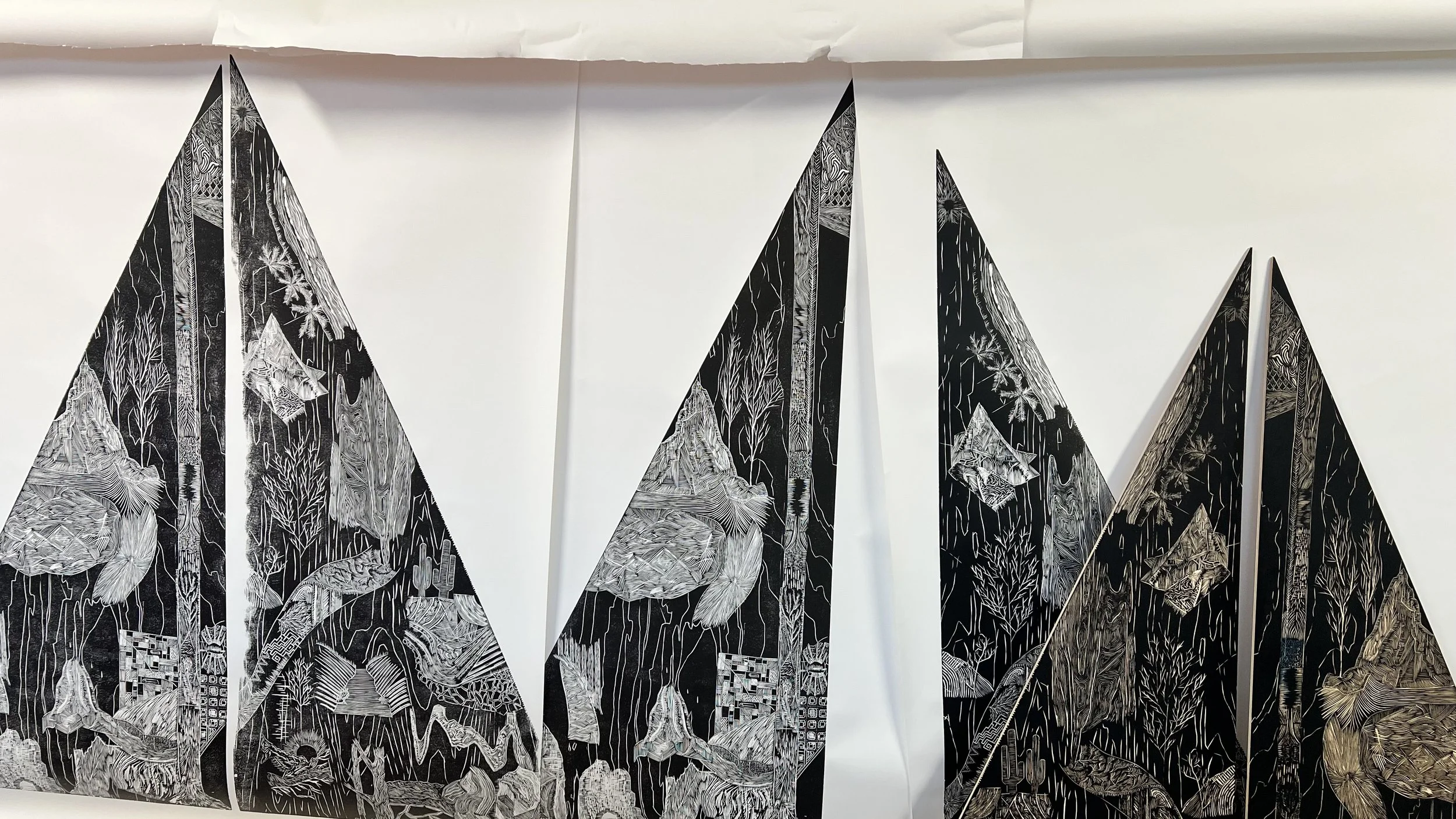
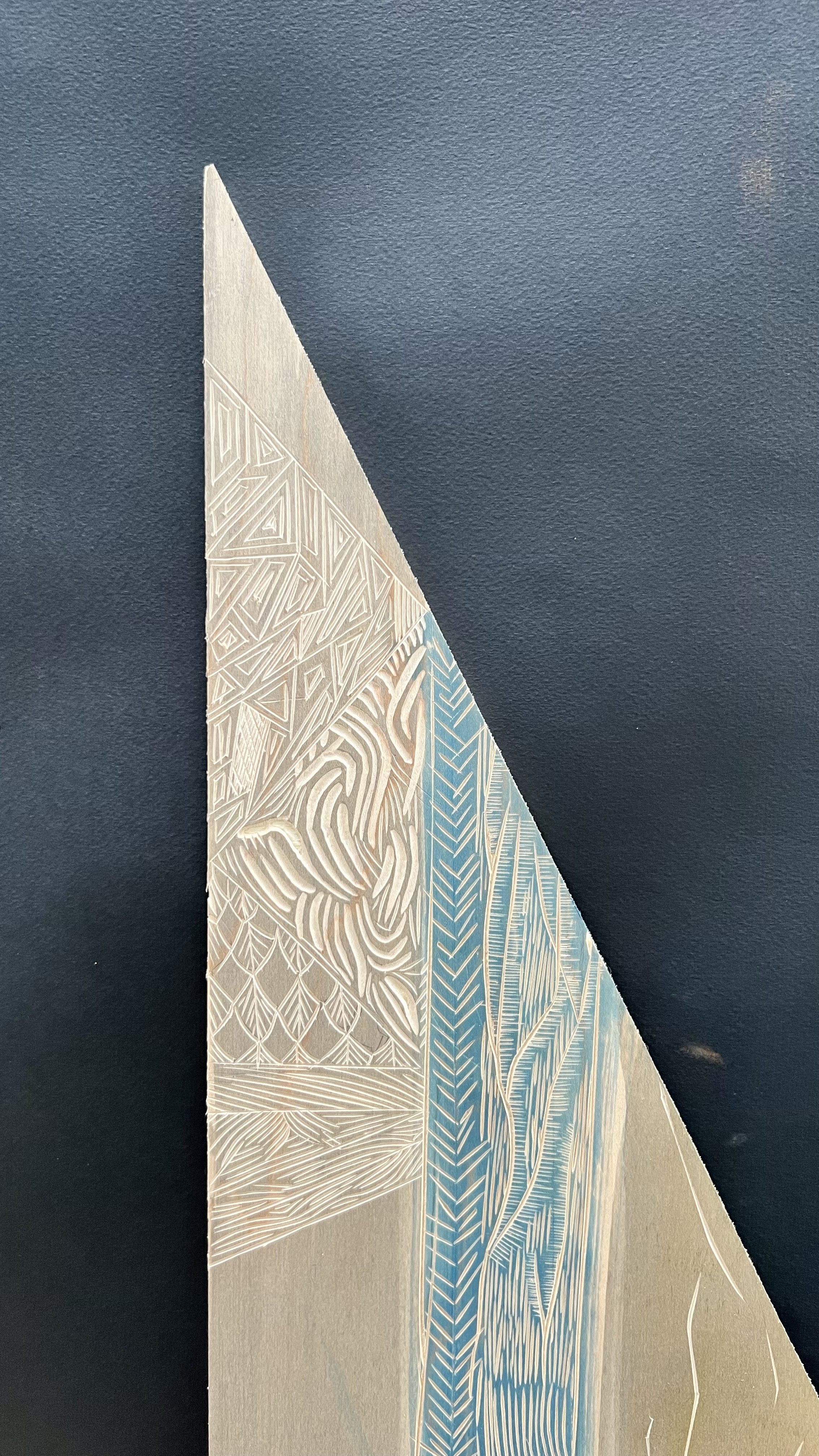
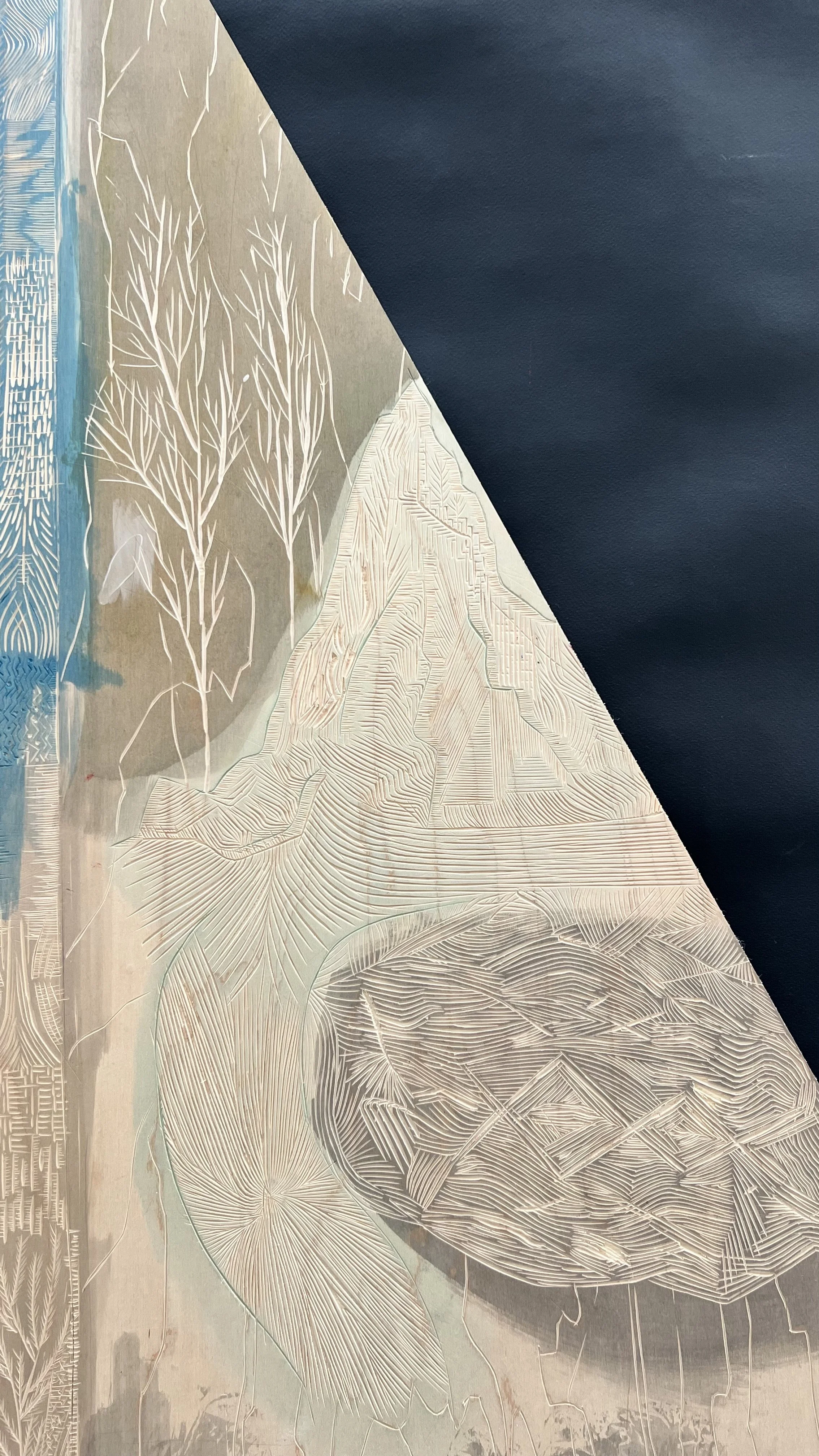
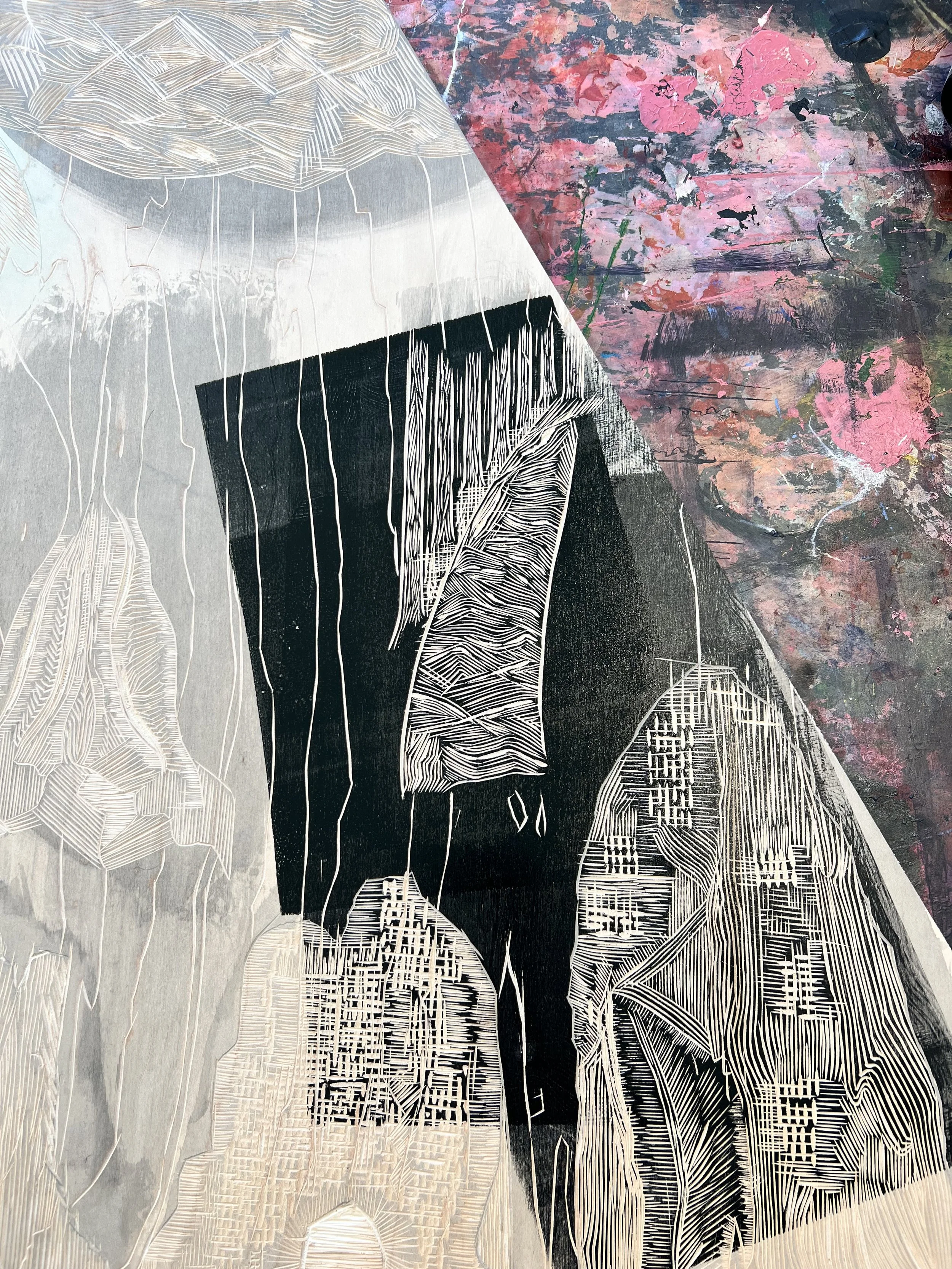
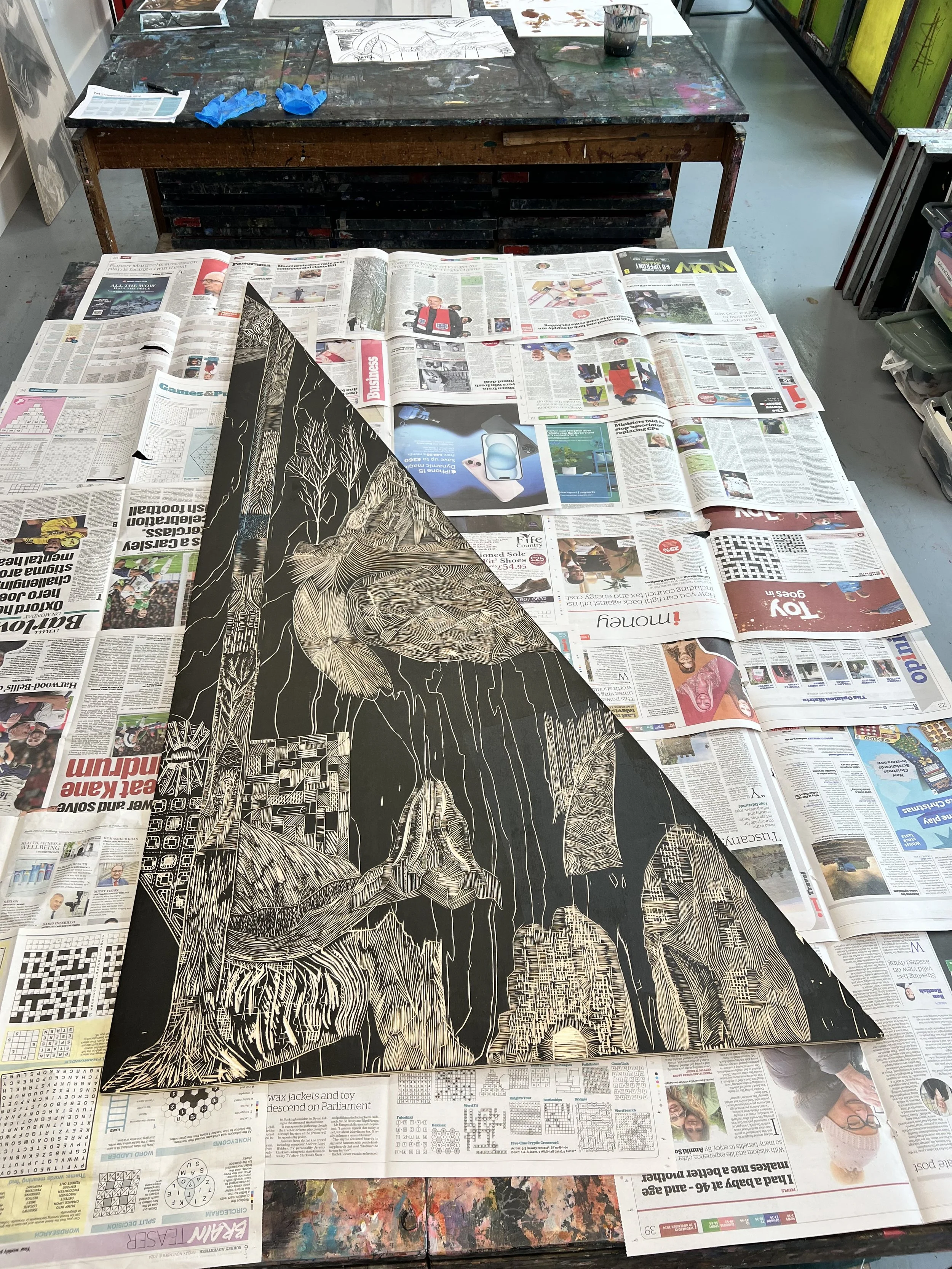
Woodcarving 172 × 166cm
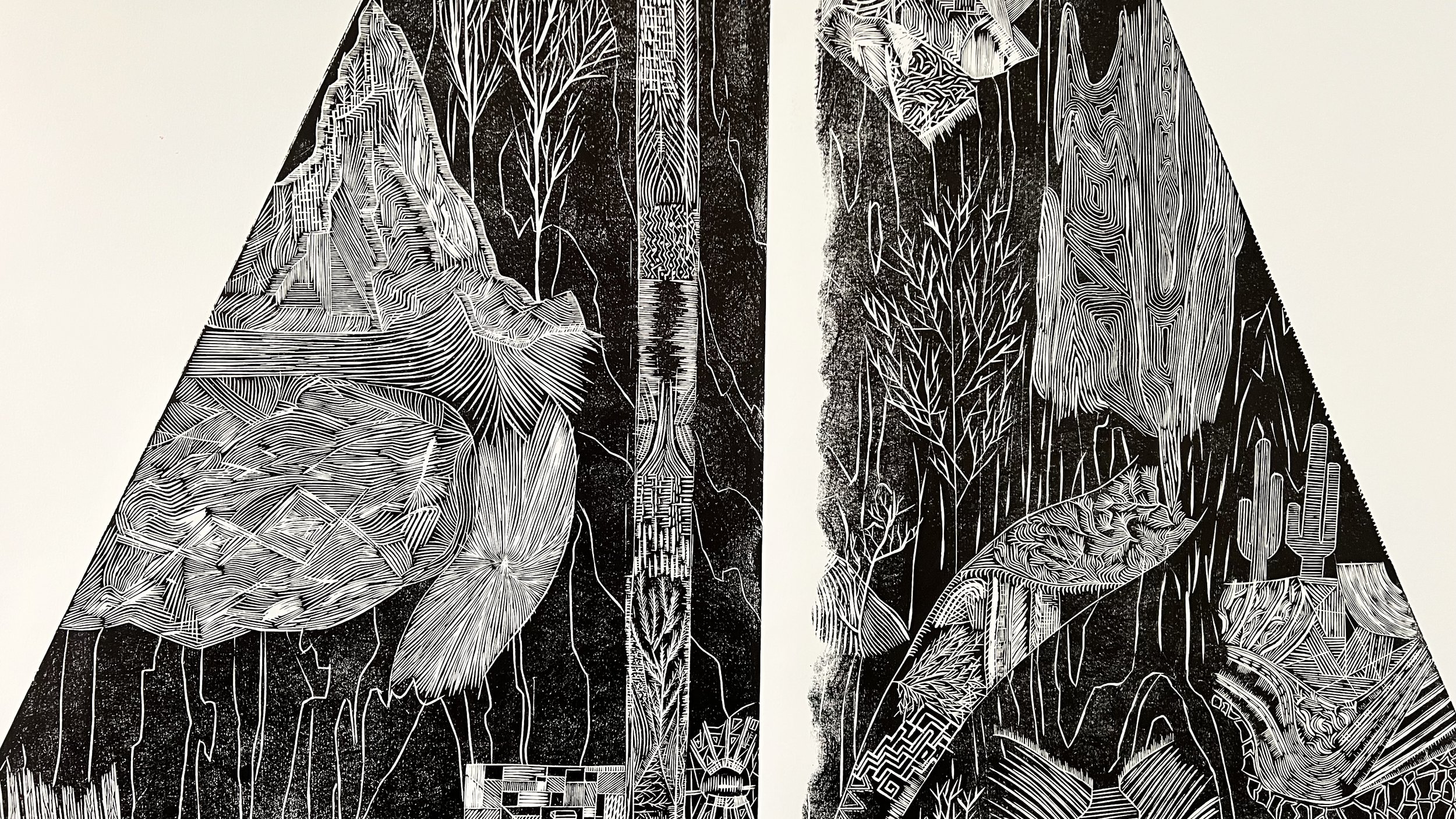
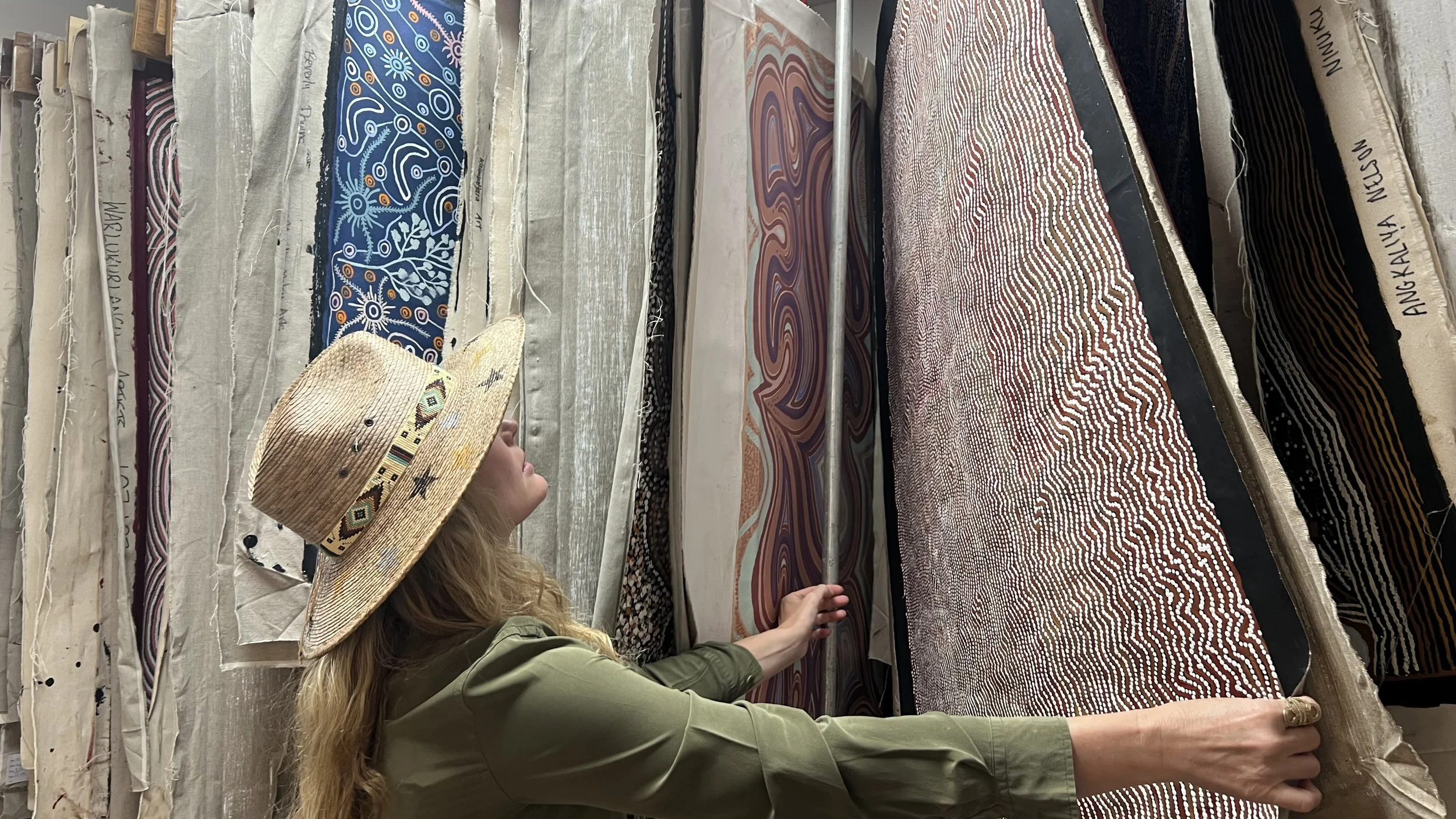
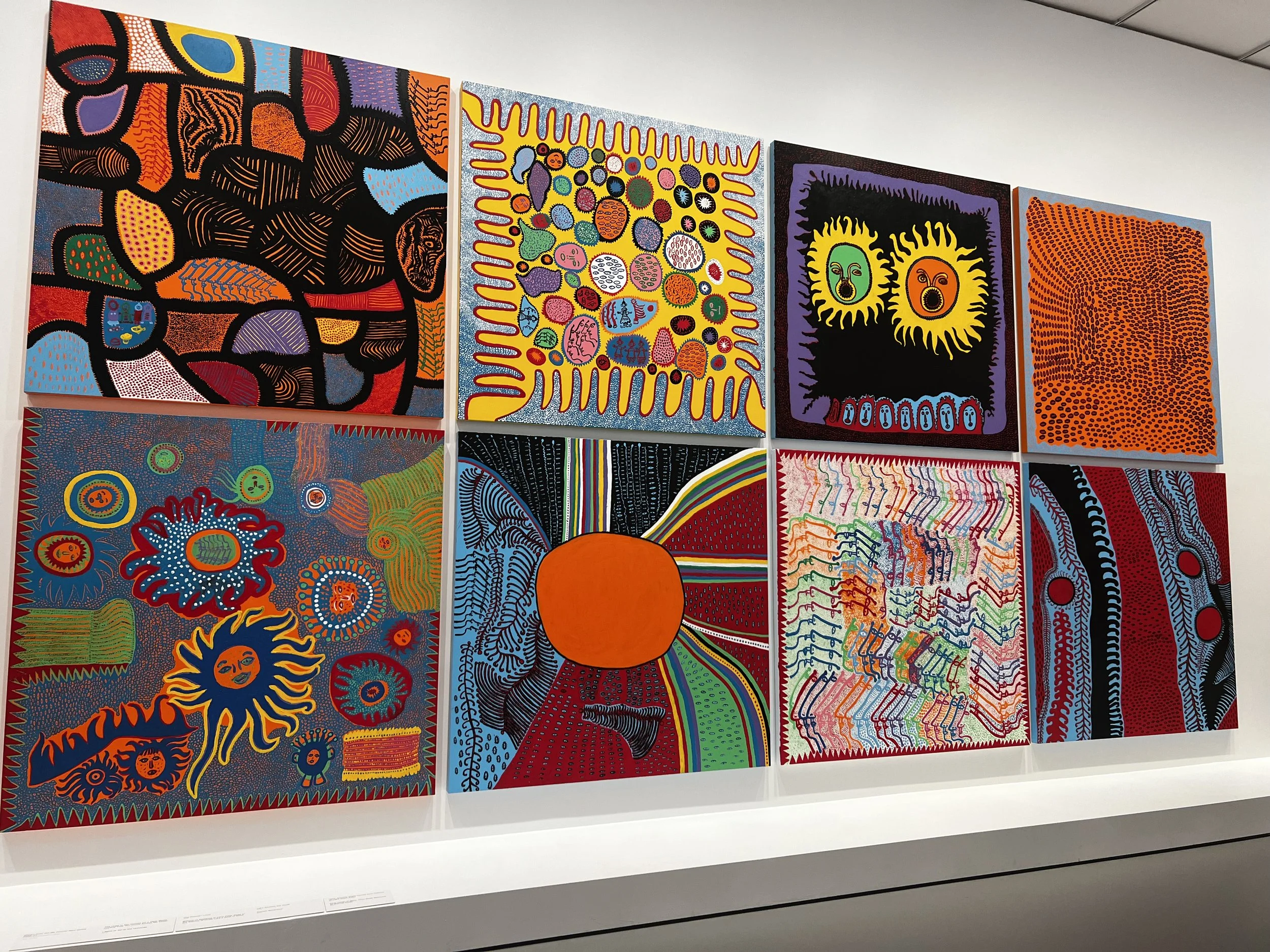
Building on my previous exploration of natural photography in my Australian collection, I wanted to translate these observations into a more tactile and expressive medium. Therefore, I decided to explore woodcutting, as a way of extending my understanding of the natural world and its textures. My ideas where further influenced by my visit to the Gallery of Central Australia in Uluru, where I first encountered Aboriginal artworks, as well as Melbourne’s National Gallery of Victoria, where I was introduced to Yayoi Kusama’s dedication to repetition and infinity. I worked on Japanese birch ply blocks due to its cross-grained structure, which facilitates carving in multiple directions. Although the imagery of my carvings was primarily inspired by my own photographs of the Australian landscape, growing up in Barcelona, a city encompassed by mountains and the Mediterranean, further supported my choice to work on wood. For this diptych, I chose to make two right-angled triangles. This structural choice redefined my compositional approach, using hard geometric edges to guide the visual movement, and energetic balance across both panels.
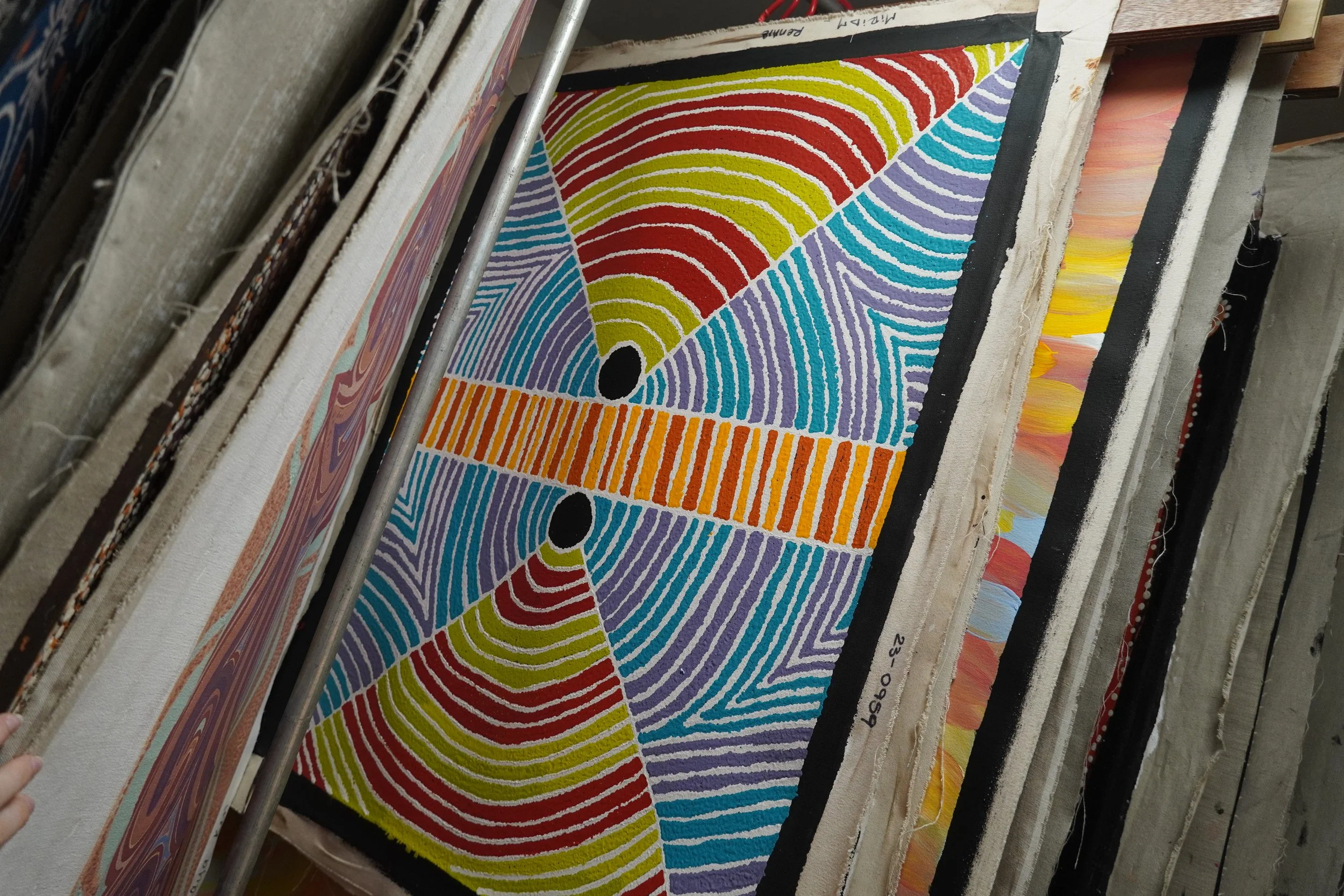
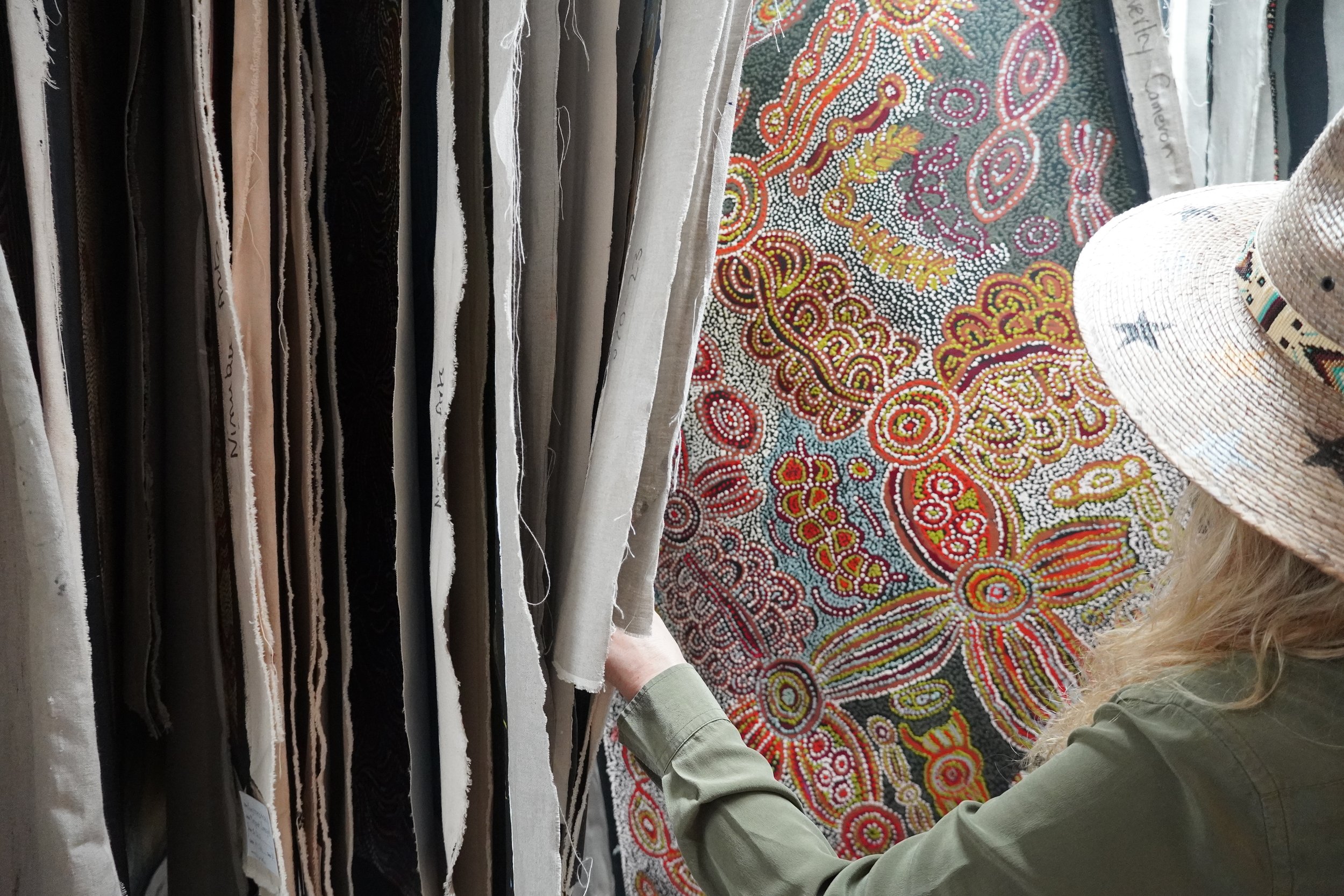
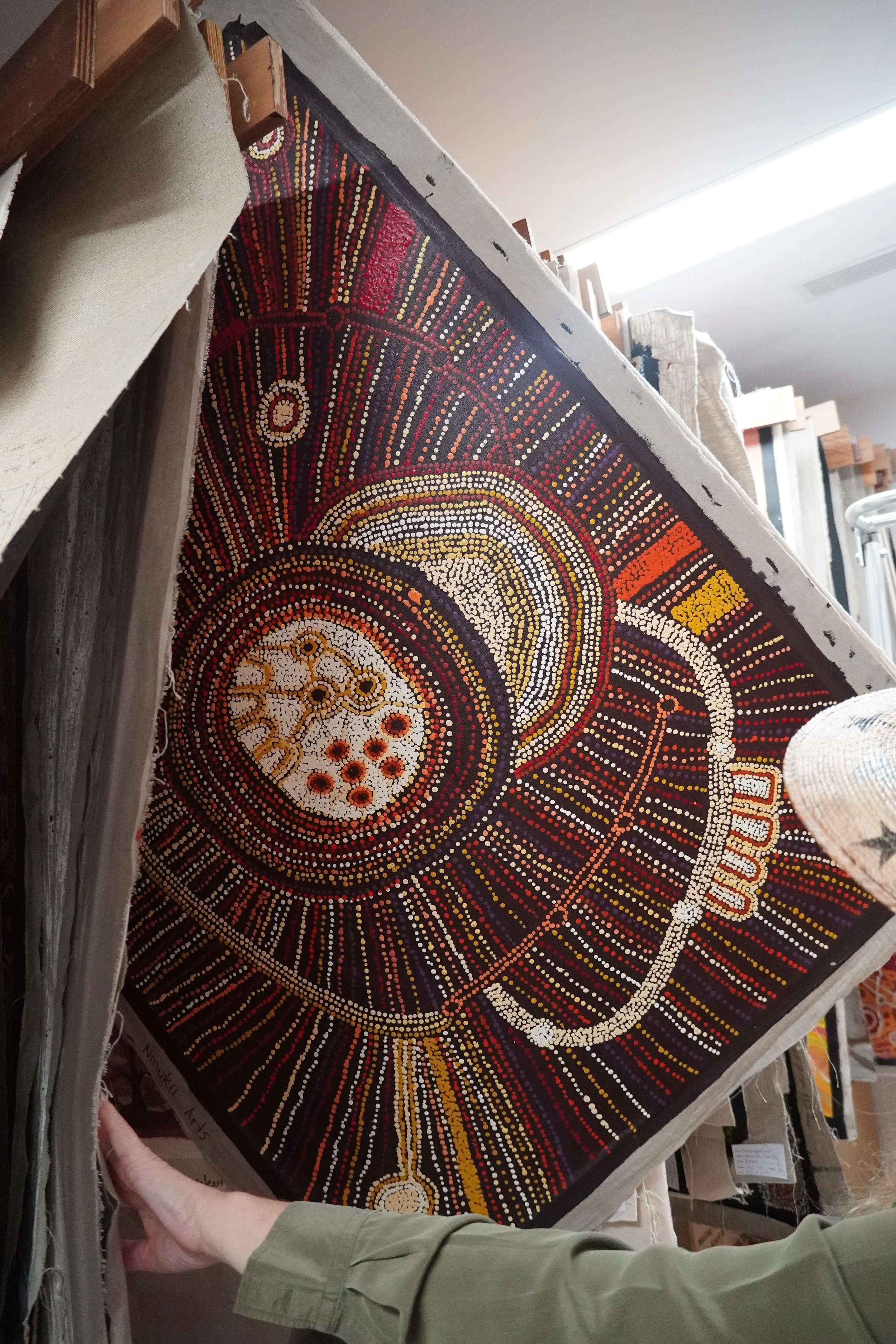
Since my intention was to depict an elegant representation of nature’s peaceful presence, I etched rivers, mountains, and coastal landforms. I envisioned to create a map of the natural world, using my study of the rhythmic and iconographic patterns of the indigenous art I encountered on my trip to Australia. Since my carvings derived from my photography, I had active control over the silhouette of each landmark. However, as I switched from using a V-gouge to a U-gouge, their internal patterns emerged intuitively; I was thinking through making and responding directly to the resistance of the wood.
I also conducted some experimental prints using water-based ink and polychrome hues to familiarise myself with the material’s behaviour, but also to observe how the ink responded to my patterned carvings. In the search for textural differences, I also randomly sprayed white spirit, smudged areas with a sponge, or dipped the paper in water. These trials informed my later mark-making, as they highlighted the relationship between the carving depth, the direction, and the ink. This made me realise how a contrast in visual depth brings the landscapes to life.
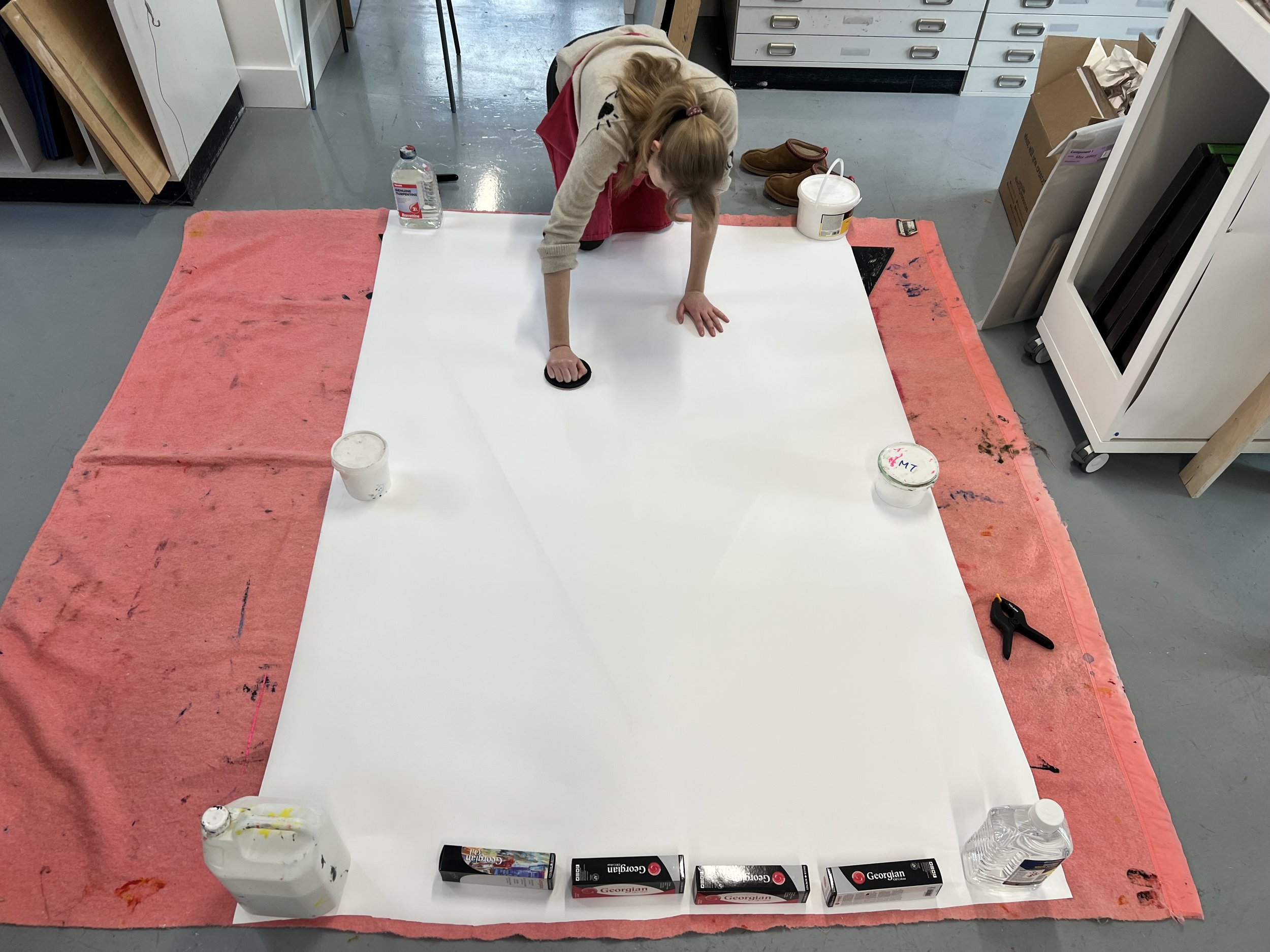
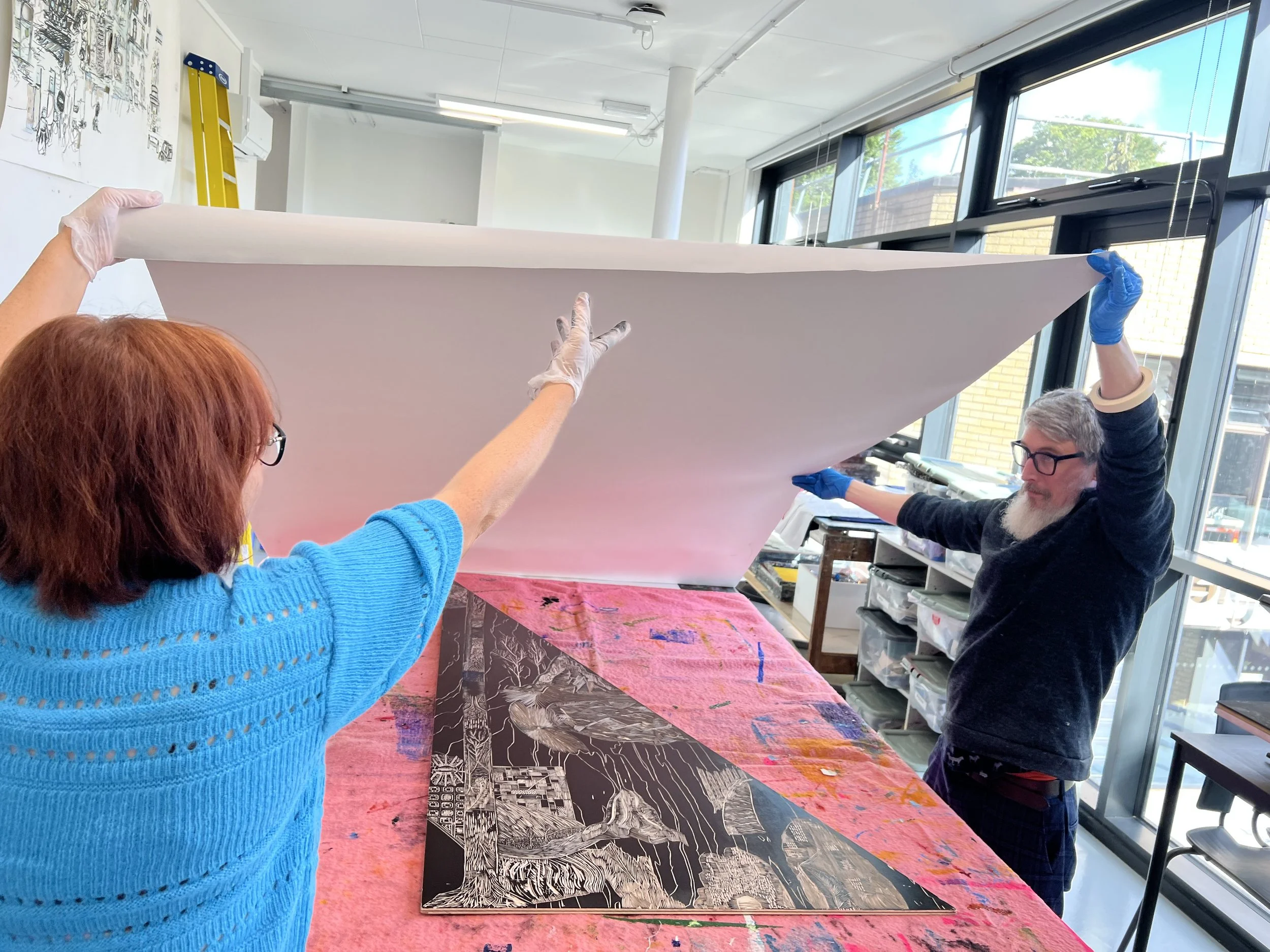
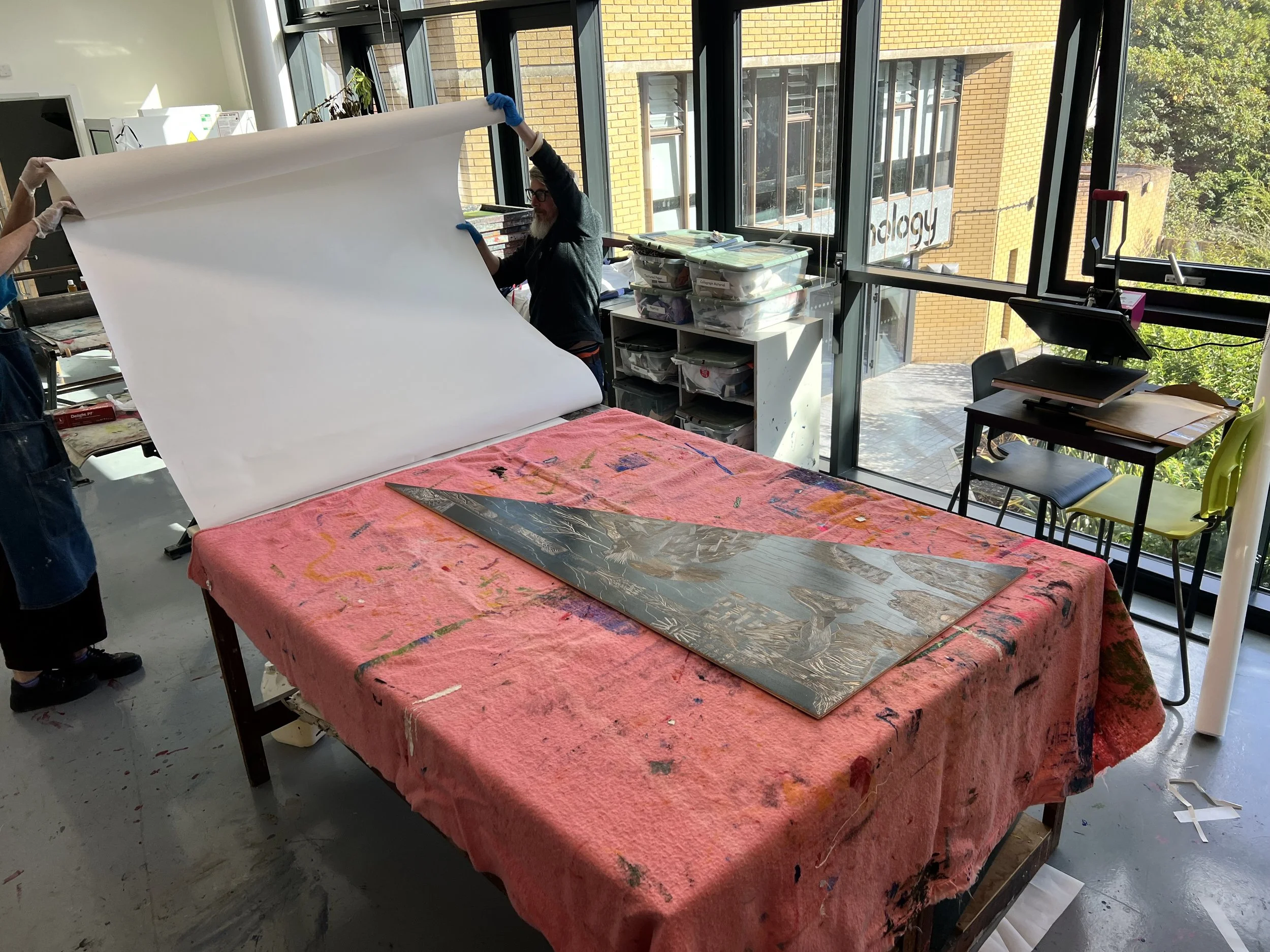
Working at a grand scale meant I was unable to use a traditional printing press. To overcome this challenge, I engineered a manual printing system using a continuous sheet of Fabriano paper on a role. I meticulously raised and stretched it above the woodcut, like turning a page of a gigantic book. Embracing the physicality and scale of this piece (being almost the same size as me), meant I needed technical assistance, which translated the work into a collaborative performance between three people. The coordinated movements resulted in clean edges, and a controlled alignment of wood and paper. It wasn’t until afterward that I realised how interesting it would have been to film this process under Timelapse. Viewing it almost like a choreography would further deepen my understanding of printmaking as a connection between body and material.
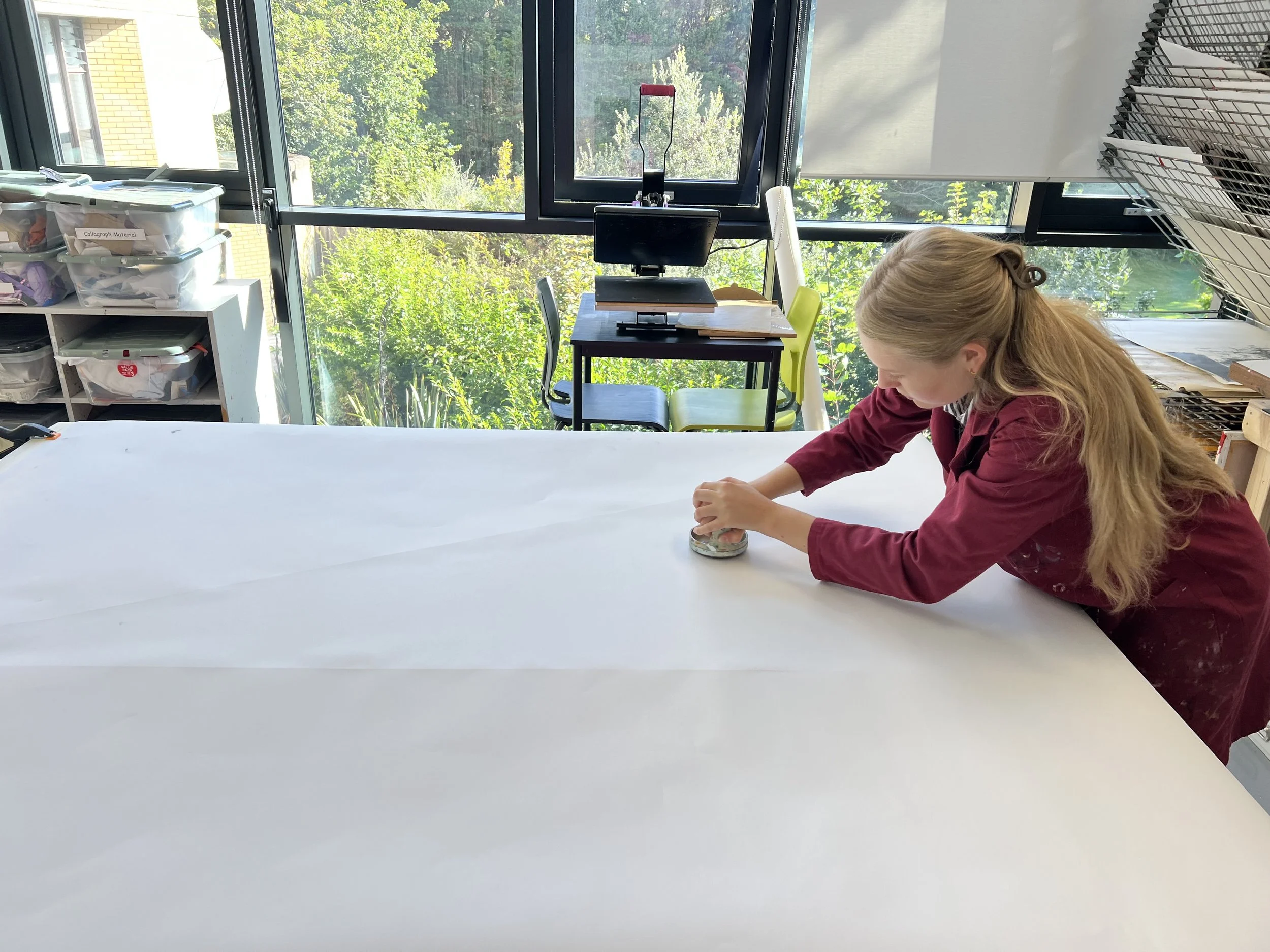
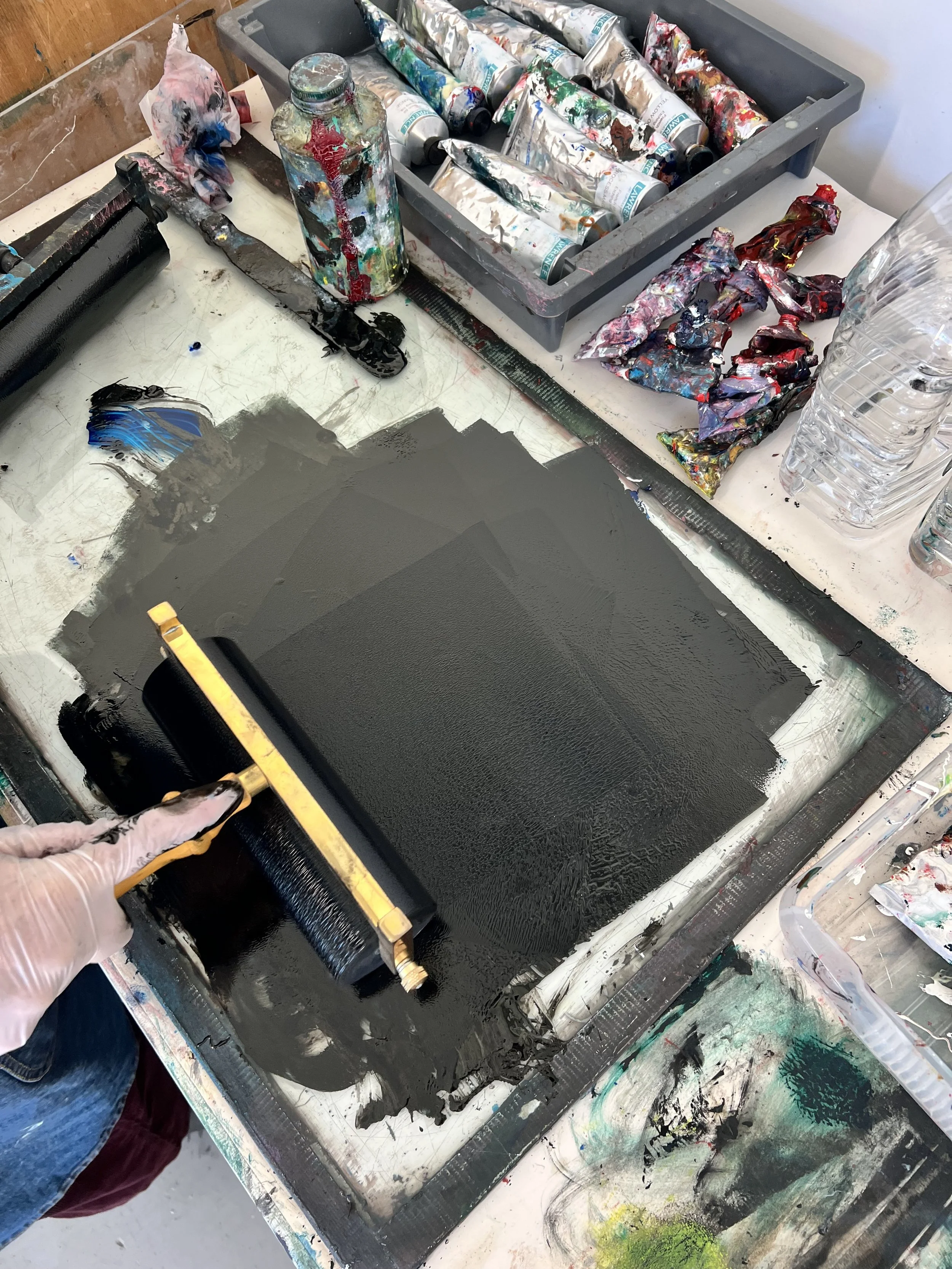
The inking process was technically demanding. Before touching the block, I roled out black oil-based etching ink onto a glass slab. By controlling the viscosity of the ink, I achieved a thin, even and consistent layer. This satisfied my aim of creating a fine, velvety coat over the wood’s surface without flooding the carved areas. It was through multiple trials that I learnt to find this balance. When the ink was applied too thickly, the outcome had splotches and a loss of detail. When I left dry areas, it became patchy with whiter highlights and broken blacks. Improvements showed through patience and repeated observation. Whenever I noticed a slight sheen over the surface, that’s when I understood the wood had full coverage but wasn’t over-inked either. Once the paper was stabilised, I used a ball-bearing barren to hand burnish the piece. This stage was very labour intensive, and felt almost like an arm workout. I spent a minimum of 30 minutes on each trial moving my hands in a circular motion to ensure the details came through on every print.
Through my experiments, I have acquired a strong understanding of how oil-based behaves differently to water-based etching ink. This led me to choose to continue my prints using oil since it doesn’t penetrate the porous wood fibres, and leaves a cleaner print. Most importantly, I wasn’t aiming for identical additions in all prints. The first impressions felt drier, and it wasn’t until multiple trials that the surface gradually sealed to produce sharper results. Each print developed a distinct character, and I embraced this variation as part of the process. No matter how much of an accurate registration I achieved, factors like pressure and material absorption continued to influence the outcomes of my work.
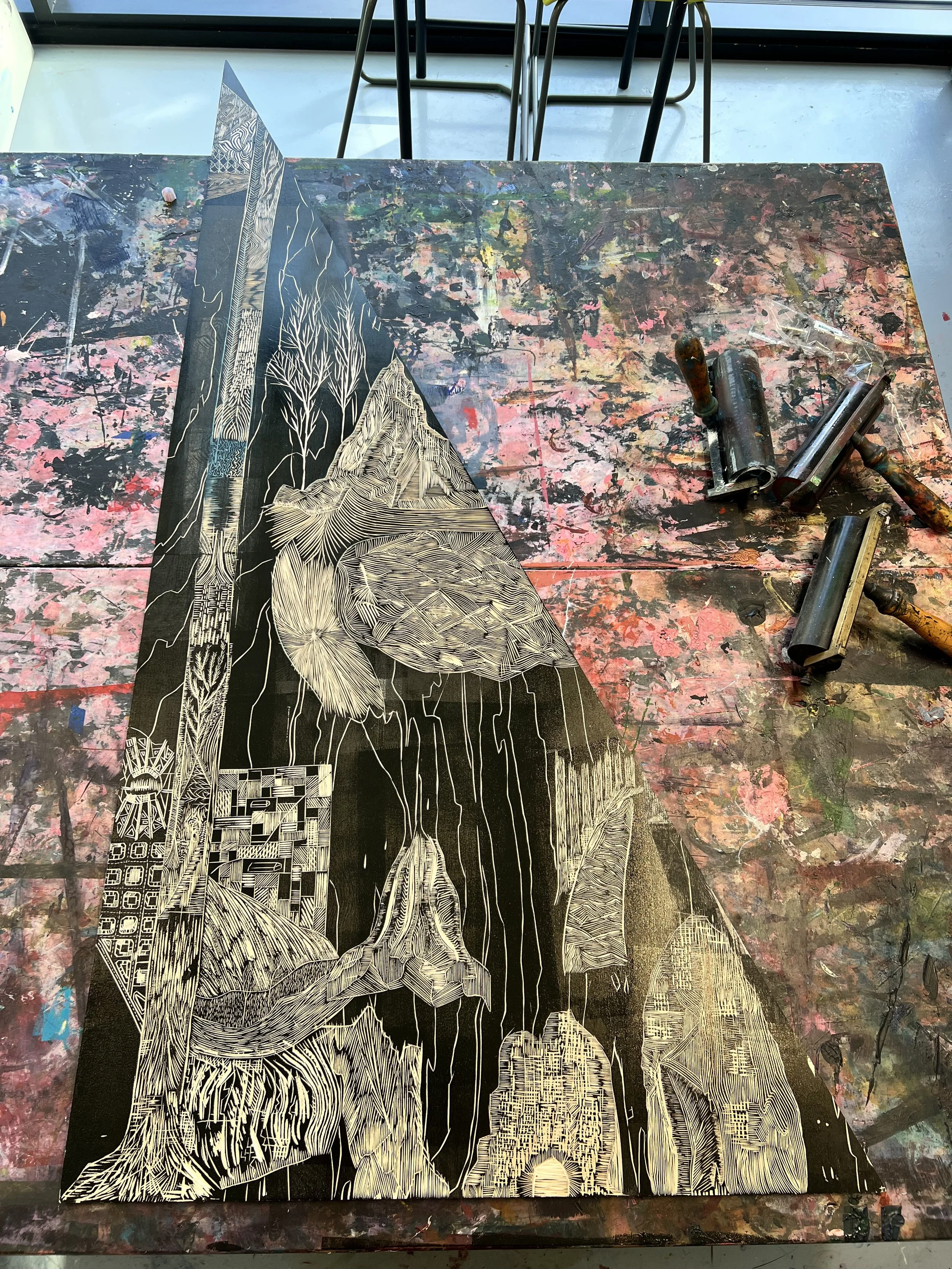
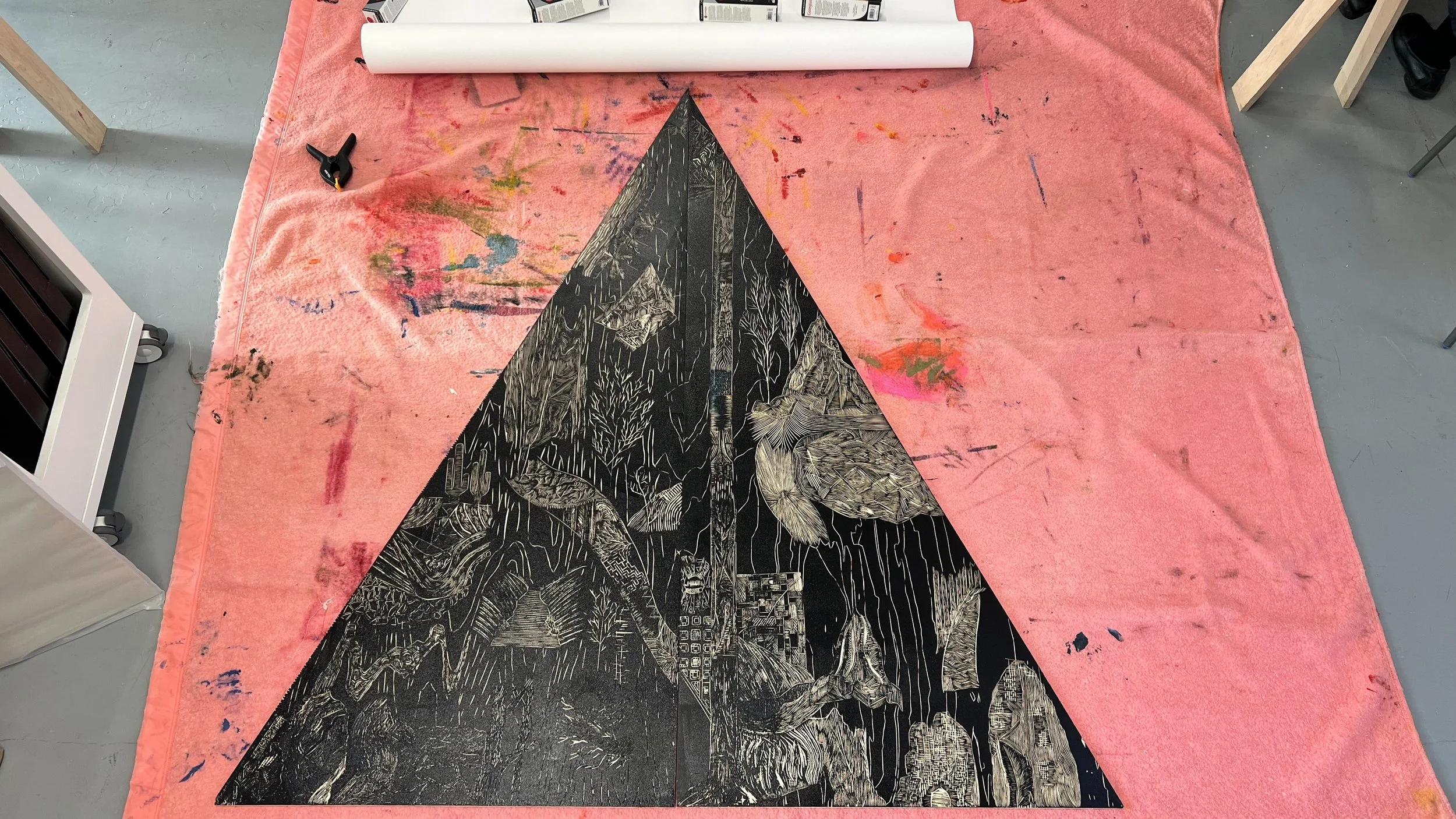
From having experimented on separate right-angled triangles, I increased the technical difficulty and visual impact of this technique by joining them to create a single-shaped triangle. This was the largest and most physically demanding print, meaning it had to be printed on the floor rather than on a table. I placed weighted items across the borders to avoid movement, and applied what I had previously learnt about paper handling and pressure. Having already produced at least 4 large-scale prints, I was able to anticipate the material’s behaviour, which resulted in a more controlled and unified image. My increased familiarity meant I could have minimal assistance and therefore managed to produce this print independently. This was the most exciting part of my woodcut project as I could finally play with the printmaking process and see the results of a seven-month carving journey. As I reflected upon all my prints, I kept asking myself the same question: ‘How is this print better than the previous one?’ and ‘How have I assessed the refinement?’ Throughout my printmaking journey, I noticed improvement when my experience changed. The repetitive process of printing ultimately became a method of refinement and accumulated technical understanding, where I felt gradual changes since my initial ghost print.
Undertaking this process has taught me how it is through habituation and the repetitive practice of a skill that we can reach mastery. The value of this lesson is also discussed in philosophy, through Aristotle’s virtue ethics. What I cherish the most from this experience is how it heightened my awareness of decision-making. I developed this through the irreversible nature of printmaking, and how each movement I made permanently translated onto the paper. After a long journey of questioning and adjustment, I have come to love all my prints, even the failed ones, because they carry the culmination of confidence, knowledge on ink consistency, pressure control, burnishing, and paper handling that I have acquired along this process. Looking back at when I first started carving, I realise how emotionally transformative this project has been. The mindset I started with has completely dissolved over time. I find that plunging myself into an empty surface comes with the risk and responsibility of fulfilling my emotional drive and the purpose of my piece. Not being able to see the future, fuels an inner fear of failure, and it is only through experimenting with unconventional mediums that I slowly began to trust myself. At this stage of the course, I now realise how this hesitation has been ever-present in my practice. Because this feeling comes back in every project I start on, I have begun to find this psychological battle addictive. The satisfaction that comes with overcoming this inexplicable fear is cathartic and springs me into creative momentum. Ultimately, this journey has motivated me to continue to pursue demanding mediums and discover what I am capable of.